
A single pump reading captures one moment in a kidney’s preservation. During hypothermic machine perfusion (HMP), flow and renal resistance can change as perfusion progresses. Following those changes over time, interpreting them alongside perfusion pressure and operating conditions, provides context that an isolated number cannot.
That context is especially important when evaluating kidneys from higher-risk donors, where pump parameters contribute to a broader clinical assessment. Gold Standard Preservation (GSP) supports transplant teams through consistent monitoring, accurate documentation, and communication of perfusion trends. Understanding these trends helps teams interpret the kidney’s response to HMP while keeping acceptance decisions grounded in the full clinical picture.
Why a Single Kidney Perfusion Reading Can Mislead You
Early resistance may be higher than values recorded later in the pump run. As perfusion progresses, flow commonly increases while resistance decreases. An elevated initial reading therefore needs context before it is interpreted as evidence of poor graft quality.
A reassuring reading also requires scrutiny. High flow with unusually low resistance, for example, may reflect a cannula leak or an open arterial branch rather than effective perfusion through the kidney. Pressure settings and the integrity of the perfusion setup must be considered alongside the displayed values. Continuous monitoring helps teams recognize changes and investigate their cause.
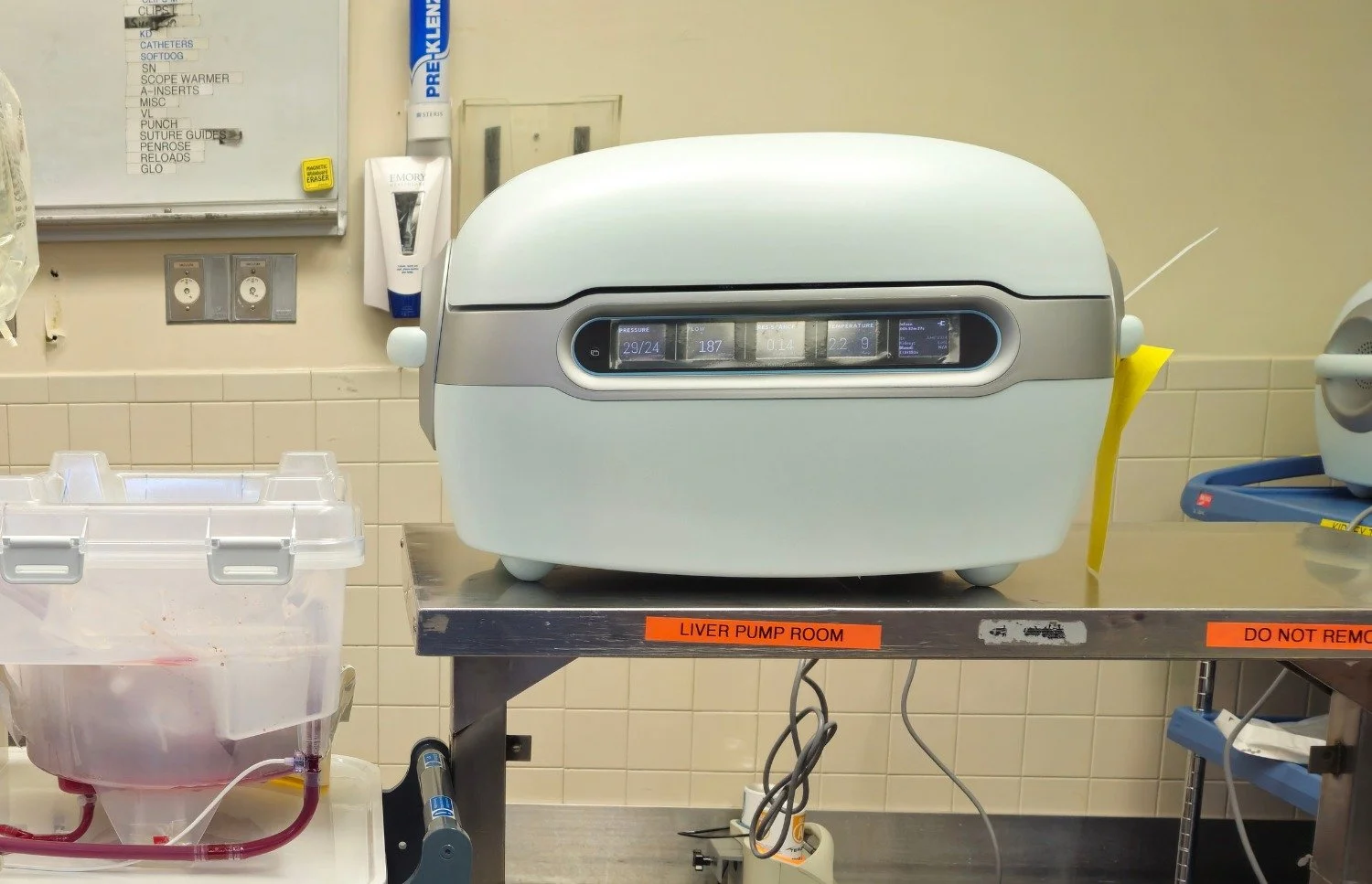
Research reinforces the limits of interpreting resistance alone. In a study of 302 machine-perfused deceased-donor kidneys, Jochmans and colleagues found that end-of-perfusion resistance was independently associated with delayed graft function (DGF) and one-year graft failure. However, its ability to predict individual outcomes was limited. The authors concluded that resistance could contribute to graft assessment but lacked sufficient precision as a stand-alone assessment tool.
For transplant teams, the practical value lies in interpreting pump data within the broader assessment: donor history, warm and cold ischemia, anatomy, biopsy findings when available, and the conditions under which each reading was obtained. A properly trained Certified Transplant Preservationist (CTP) adds hands-on assessment to that process by visually evaluating the kidney and perfusion setup, identifying and correcting cannulation problems, and securing open arterial branches that allow perfusate to leak. These assessments help distinguish technical problems from changes in the kidney’s response to perfusion. Documenting trends alongside those findings and any corrective interventions gives the transplant team a more reliable record to inform acceptance decisions.
How Flow and Renal Resistance Trends Reveal Graft Behavior
During HMP, renal resistance is calculated by dividing perfusion pressure by flow, so these parameters must be interpreted together. At a stable pressure, rising flow and falling resistance indicate that preservation solution is moving more readily through the kidney’s vascular bed, provided technical problems have been excluded. This circulation delivers cold preservation solution through the renal vasculature, including the microvasculature, to support tissue preservation. Tracking these changes helps teams assess perfusate delivery throughout the pump run, although the readings alone cannot confirm uniform tissue perfusion or graft viability.
What Do Kidney Perfusion Trends Tell You About a Donor Kidney?
Kidney perfusion trends describe how the renal vasculature responds during preservation. At a stable pressure, rising flow with falling resistance is consistent with perfusate moving more readily through the vascular bed. Once those values stabilize, a plateau may reflect a sustained response rather than a problem.
Some small studies have linked resistance changes with early transplant function. A 2020 study in Scientific Reports evaluated 15 kidneys from expanded-criteria donors undergoing end-ischemic hypothermic oxygenated machine perfusion (HOPE). After 60 minutes, the mean relative reduction in resistance was approximately 54% in kidneys with primary function versus 25% in those that developed delayed graft function (DGF). Flow and resistance largely plateaued after the first hour in this cohort. These observations suggest that the response to perfusion may provide information beyond the starting value.
A 2018 study in Artificial Organs, involving 35 transplant procedures, also reported an association between faster achievement of its resistance target and better early outcomes, whereas biopsy scores were not associated with those outcomes. However, kidneys that failed to meet the study’s resistance criterion were excluded from transplantation, limiting how broadly the findings can be applied.
The evidence remains mixed. A 2025 analysis of COMPARE trial data found that resistance trajectories did not predict DGF, one-year kidney function, or graft survival. Trends therefore remain useful for monitoring the perfusion process, but they do not provide a validated pass-or-fail test for transplantation.
During the run, an unexpected change should prompt assessment of both the kidney and the perfusion setup. Reviewing pressure settings, cannulation, tubing, leaks, temperature, and the kidney’s appearance helps teams investigate the change. Tissue swelling also deserves attention: cellular swelling and interstitial fluid accumulation can impair microvascular perfusion and contribute to increased resistance. A trained preservationist’s visual assessment can identify developing swelling, although pump readings alone cannot establish its cause. How the readings respond to any correction makes the trend more informative than simply labeling it favorable or unfavorable.
Continuous Kidney Perfusion Monitoring Supports Expanded-Criteria Placement
Expanded-criteria kidneys often travel farther and wait longer, so placement teams need confidence before accepting them. According to the OPTN/SRTR 2023 Annual Data Report, 27.9% of recovered deceased donor kidneys went unused that year. Continuous kidney perfusion monitoring gives accepting surgeons richer evidence than a single value relayed by phone.
In addition, trend data helps organ procurement organization (OPO) and transplant teams share one clear picture during allocation. Instead of debating one resistance value, both sides can review the full curve and its timing. Consequently, decisions move faster and rest on documented physiology rather than impression or habit.
• Timed readings at set intervals let surgeons compare early and late behavior across the full pump run.
• Annotated events, such as cannula adjustments or pressure changes, explain sudden shifts that raw numbers cannot.
• Side-by-side flow and resistance graphs show direction, plateau timing, and stability at a single glance.
• Clear notes on donor factors keep pump data connected to the broader clinical picture for every reviewer.
Together, those elements turn a pump log into a decision tool your surgeons can trust at any hour. For a deeper look at placement strategy, see how machine perfusion supports kidney placement success. Ultimately, better data presentation supports better conversations and better use of scarce donor kidneys.
How GSP Applies Trend-Based Evaluation on Every Pump Run
GSP specialists track kidney perfusion parameters continuously rather than capturing occasional snapshots for the chart. Our specialists work across major pump platforms, so the method stays steady regardless of the console. Meanwhile, every reading is logged with time stamps, pressure settings, and any interventions made during the run.
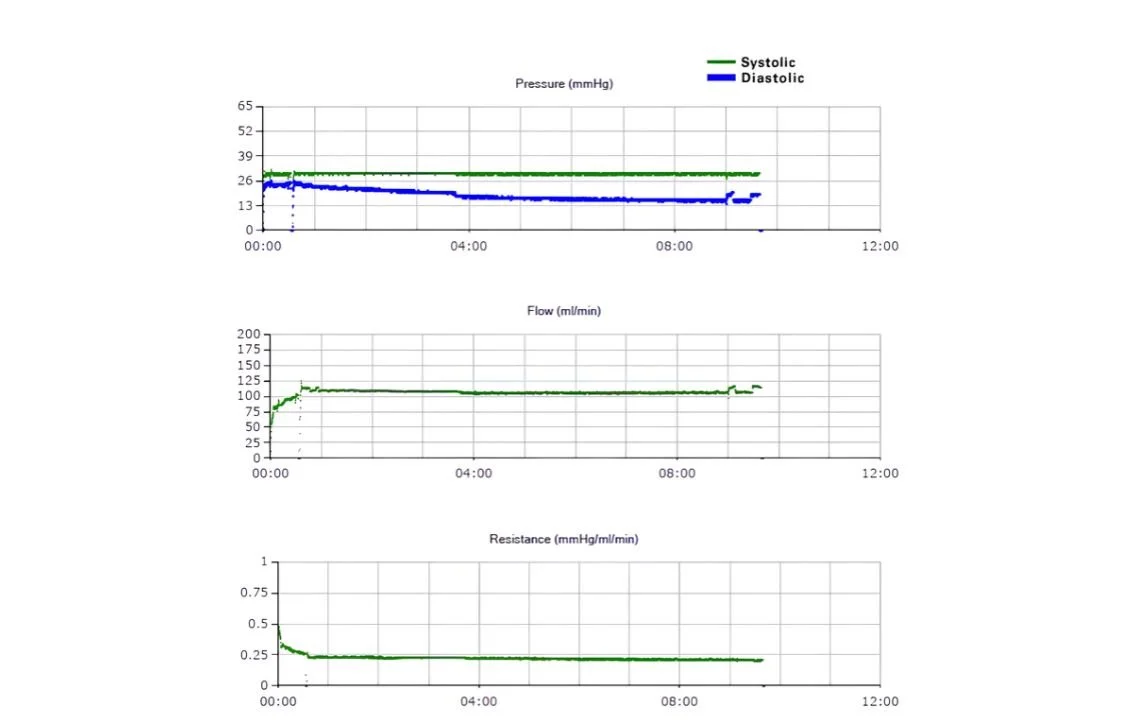
When a trend shifts unexpectedly, the specialist first rules out mechanical causes before flagging a graft concern. Next, the team escalates findings to the surgeon with the full curve rather than an isolated number. As a result, the accepting surgeon receives context that supports a confident and defensible placement decision.
• Device-agnostic expertise keeps evaluation methods steady across LifePort, Kidney Assist, and other hypothermic pump platforms.
• Around-the-clock coverage keeps trend monitoring active through overnight runs, weekend procurements, and long transport windows.
Learn more about how device-agnostic perfusion machine support helps programs keep one standard across equipment. Similarly, our overview of hypothermic kidney perfusion machine programs covers the operational side of running HMP well. Together, the two resources show how methodology and staffing combine to protect every donor kidney.
Put Kidney Perfusion Trends to Work for Your Transplant Program
Single readings will always have a place, yet they rarely tell the full story of a donor kidney. Kidney perfusion trends give your surgeons a clearer view of graft behavior across the entire pump run. In turn, that clarity supports more confident decisions on the expanded-criteria kidneys your patients need.
Gold Standard Preservation brings trend-based evaluation, device-agnostic expertise, and continuous coverage to every case you share. Our specialists document each run clearly, so your team can review the complete picture at any hour. To bring trend-based kidney monitoring into your program, contact the Gold Standard Preservation team today.