
Hospital executives need to understand what a kidney machine perfusion program, typically built on hypothermic machine perfusion (HMP), delivers and what it protects. Case counts and service fees capture activity and expenditure, but they do not show whether a team prevented a preservation interruption, resolved a cannulation problem, or helped a surgeon assess a challenging donor kidney.
Meaningful key performance indicators (KPIs) connect clinical capability, risk management, operational reliability, and cost. For transplant services leadership, the question extends beyond how many kidneys were pumped. It includes whether the program had the people, skills, and processes needed when routine preservation became a clinical problem.
Why Transplant Services Need Defined HMP Metrics
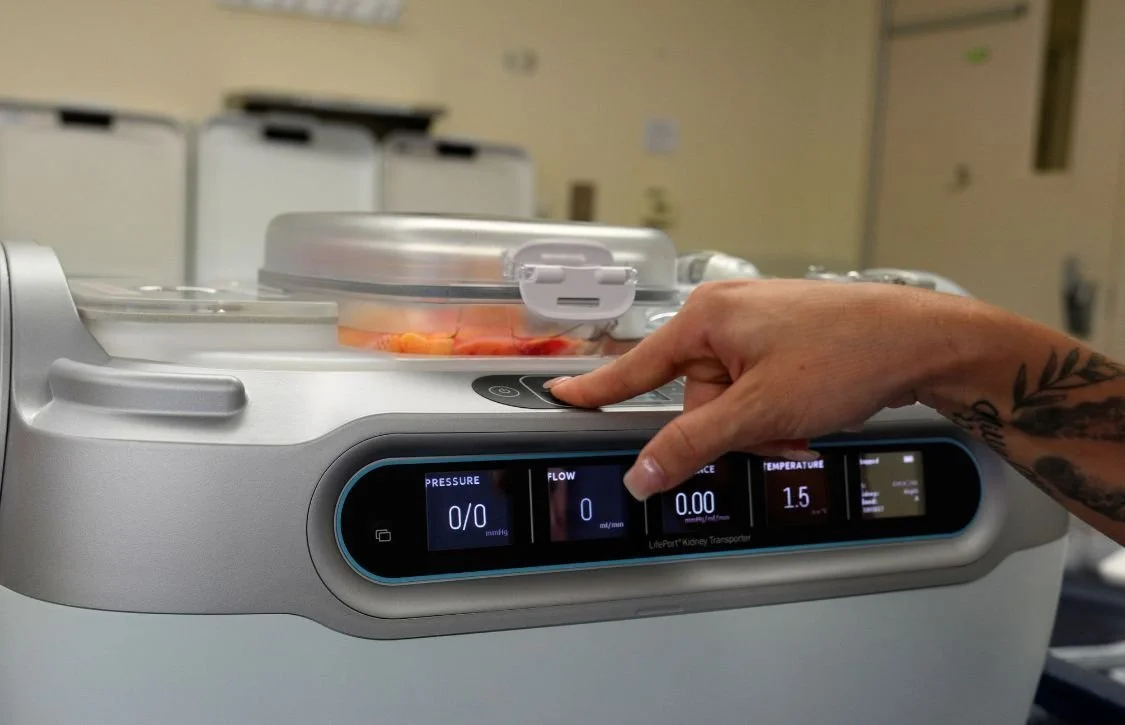
Kidney perfusion devices are designed to make routine operation straightforward. The surrounding clinical work still requires judgment. Pressure and temperature management, visual assessment, cannulation troubleshooting, biopsy support, and response to transport incidents depend on capabilities that a device interface cannot supply.
The distinction becomes especially important when a center accepts several higher-risk kidneys simultaneously. Each kidney may arrive with a different preservation history, anatomy, assessment requirement, or unresolved concern. Counting available pumps does not establish that qualified personnel can manage those demands.
The Institute for Healthcare Improvement's measurement framework combines process, outcome, and balancing measures. Applied to HMP, that means examining whether work follows the intended standard, what the program delivers, and whether changes introduce problems elsewhere. Reducing staffing expenditure, for example, should be reviewed alongside coverage gaps, delayed interventions, and added workload for the transplant team.
Every KPI should have a standard definition, data source, owner, and review schedule. Teams also need to distinguish donor episodes, individual kidneys, and staffing assignments. Two kidneys may share an activation while requiring separate assessments and perfusion records.
Gold Standard Preservation's (GSP) approach to evaluating perfusion program success metrics begins with that broader view of performance: access, capability, reliability, and the resources required to sustain them.
Operational KPIs That Reveal Program Efficiency
Operational measurement should identify whether the program can deliver the intended service when it is needed. A quick response to a telephone call is useful, but the kidney also needs qualified staff, prepared equipment, and a clear management plan on arrival.
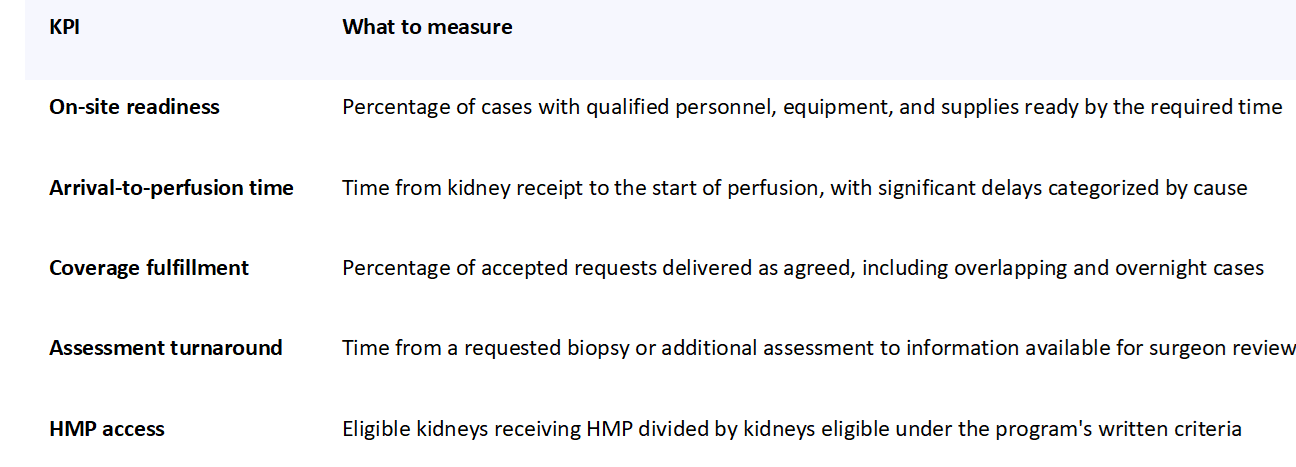
Assessment turnaround deserves particular attention. For kidneys managed outside the OPO, obtaining a biopsy, preparing slides, and coordinating pathology review can create additional logistical steps. Qualified personnel who can perform the authorized procedure and prepare material according to the local pathology workflow may reduce the number of separate arrangements required.
Measure that contribution directly: availability of qualified biopsy support, time to specimen collection, preparation or transfer time, specimen adequacy, and repeat sampling when required. Keep preservation-team turnaround separate from pathology interpretation time so the measure identifies where a delay occurred.
Preservation duration also explains workload. Report pre-perfusion time, pump duration, and the program's defined total ex-situ interval separately. Longer runs require continued temperature management, monitoring, documentation, and relief coverage, even when parameters remain stable.
Review operational results by site, shift, and case complexity. An unexplained delay deserves investigation; a documented interval for difficult anatomy or necessary assessment tells a different story.
Quality KPIs for Transplant Services Leadership
Quality KPIs should demonstrate that staff can deliver the clinical service, rather than simply complete a device checklist. GSP uses a standardized approach to pressure and temperature management because reliable decisions require both an approved process and personnel who understand its purpose.
Which KPIs Should Transplant Services Track for Kidney HMP?
Transplant services should track readiness, coverage, assessment turnaround, and access to HMP. Core quality measures should include demonstrated competency, temperature control, pressure-management adherence, perfusion continuity, escalation response, and complete handoffs. Clinical outcomes and total program costs help leaders evaluate the service's wider contribution.
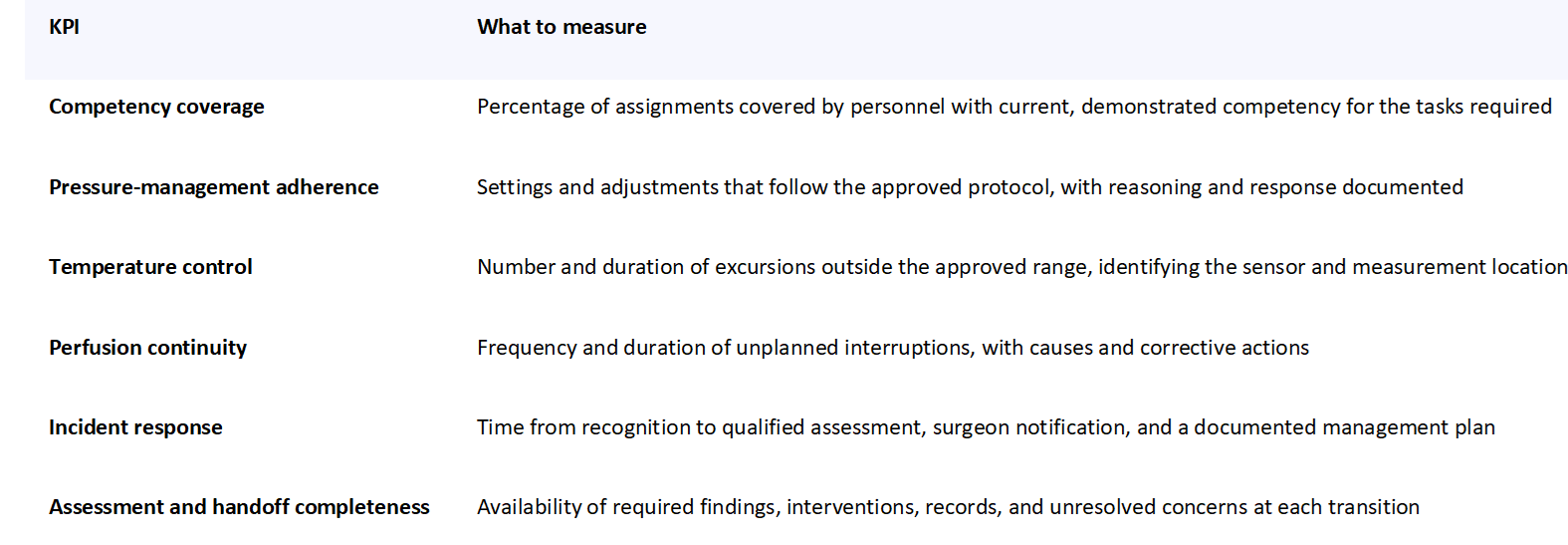
Competency should be verified through observed performance and documentation review. Depending on the assigned role, that may include recognizing inadequate cannulation, identifying open branches or leaks, maintaining sterile technique, managing cooling, interpreting pressure and flow together, and knowing when to escalate.
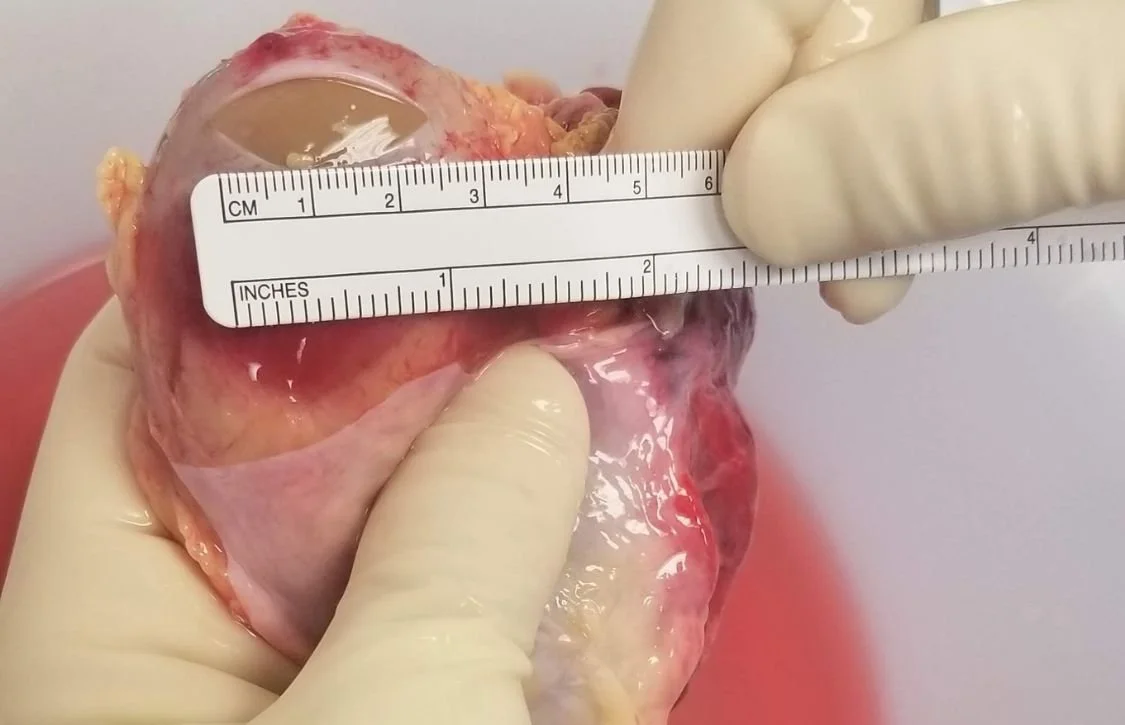
Biopsy and slide preparation require separate verification. A person qualified to monitor a device may not have the surgical or specimen-preparation skills needed to support a more complex assessment.
What a Transport Incident Reveals About Program Risk
In a case encountered at a center supported by GSP, a kidney underwent a seven-hour ground journey, with approximately nine additional hours anticipated before transplantation. The pump traveled in the vehicle's trunk during the summer, where its audible alarms could not be heard. On arrival, the displayed ice-container temperature exceeded 12°C, and the device had stopped due to overheating.
The event illustrates a gap that case volume and cost-per-run reporting can miss. Transportation was completed, but preservation oversight had broken down.
The receiving center needed qualified personnel to assess the device and cooling system, establish when and for how long perfusion had been interrupted, restore appropriate operating conditions under the applicable protocol, and communicate the findings to the accepting surgeon. Returning the system to its intended temperature would address the operating condition; the surgeon still needed the exposure history and clinical assessment to judge the kidney.
Programs should therefore measure transport readiness and incident management: appropriate device placement, access to monitoring and alerts, trained transport personnel, clear escalation contacts, and a receiving team capable of intervening.
Record the displayed temperature accurately. An ice-container reading is important evidence, but it should not be described as a measured kidney tissue temperature.
Scaling Capacity Without Fixed FTE Overhead
Capacity means having the necessary skills available when the clinical situation requires them. A staffing plan may cover routine monitoring while leaving gaps in cannulation troubleshooting, biopsy support, transport response, or management of several challenging kidneys.
Internal and outsourced models should be compared against the same clinical requirements. Leaders need to know which tasks each model covers, how competency is maintained, how relief works, and what happens when demand exceeds the planned staffing level.
Cost remains important, but an invoice is only one part of the assessment. Preservation incidents can create additional evaluations, staff demands, recipient scheduling disruption, and potential organ nonuse. Programs should capture those consequences rather than assume that the lowest service fee represents the lowest total cost.
An economic evaluation conducted alongside a multicenter randomized kidney trial considered hospitalization, dialysis, and complications as well as preservation costs. Its findings support evaluating the wider episode of care when assessing HMP's value.
GSP's discussion of the return on investment of outsourced perfusion services addresses the staffing decision. A meaningful comparison should include specialist capability, reliable coverage, assessment support, and total cost.
Specialized Assessment Can Preserve an Opportunity to Transplant
The experience of 34 Lives illustrates the potential contribution of specialized assessment. In its 2025 ARC/SNAP publication, 158 selected unused or hard-to-place kidneys underwent subnormothermic acellular perfusion assessment, and 142 were subsequently transplanted.
Assessment included urine output, renal blood flow, oxygen consumption, and other findings considered by the accepting physicians. Urine production provided information about function, but acceptance relied on a broader assessment. The reported 90% transplantation rate describes that selected cohort, rather than an expected rescue rate for every declined kidney or transport incident.
For HMP programs, the relevant KPI is access to an appropriate assessment pathway when uncertainty remains. Track referrals, time to additional assessment, reasons for acceptance or nonuse, and recipient outcomes where available. Routine HMP support and SNAP assessment provide different information, but both depend on trained personnel and coordinated clinical processes.
Measure and Grow Your Transplant Services With Confidence
Kidney HMP programs need KPIs that show whether the service is ready, competent, and able to respond when preservation becomes complicated. Operational efficiency matters alongside temperature control, sound pressure management, assessment capability, and dependable escalation.
A useful dashboard connects those measures with clinical outcomes and cost. It helps leadership identify whether the next investment should be in training, transport processes, specialist coverage, equipment, or access to additional assessment.
Gold Standard Preservation provides around-the-clock organ perfusion support with standardized pressure and temperature management, structured documentation, and defined escalation pathways. Our clinical support helps transplant teams manage routine preservation and the interventions that require specialized judgment. Contact GSP to discuss the capabilities and coverage your kidney HMP program needs.