
Evaluating the ROI of Outsourced Organ Perfusion Services for Transplant Programs
Transplant programs are being asked to accept more organs, manage more complex donors, and move faster with teams that are already stretched. Machine perfusion has become an important part of that response, but the device itself is only one part of the operational equation. Programs still need trained personnel, preservation expertise, recovery support, and reliable workflows around each case.
That is why the ROI of outsourced organ perfusion services cannot be measured only by the per-case cost of coverage. The stronger question is whether the model adds usable capacity across the transplant workflow: perfusion, recovery assistance, biopsy coordination, repackaging, research organ handling, and rapid response when conditions change.
Viewed that way, outsourced organ perfusion and preservation is not just a way to avoid building an internal team. It is a way to extend clinical and surgical bandwidth while keeping preservation expertise embedded in the work.
What ROI Means in the Context of Perfusion Services
Generating a healthy return on investment in transplant operations is not the same as in other areas of healthcare. Organ perfusion and preservation services do not typically generate direct revenue on their own. Their contribution is operational: they can heavily influence whether a program can accept a last-minute organ offer, support patients located farther from the center, expand its waitlist, and maintain consistency under staffing pressure.
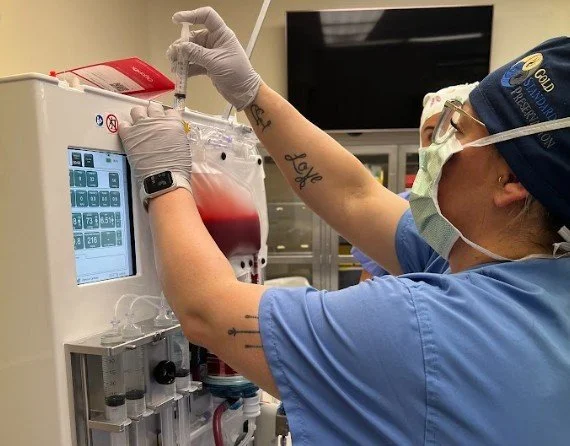
That value shows up as greater responsiveness to time-sensitive offers, more flexibility around donor and recipient logistics, reduced reliance on overtime or premium differential pay, and stronger preservation support across the transplant workflow. Trained preservationists can assist with recovery, cannulation, biopsy coordination, organ repackaging, research organ handling, and rapid response when plans change. In that model, outsourced perfusion is not just machine coverage. It is access to preservation expertise that extends the program’s clinical and surgical capacity.
This framing matters because programs that evaluate outsourced organ perfusion and preservation services only on a per-case cost basis often miss the larger picture. The relevant comparison is not the cost of a clinical partner versus no partner. It is the cost of a clinical partner versus the full cost of building equivalent internal capacity.
The True Cost of Building Internal Perfusion Capacity
Building an in-house organ perfusion services team means investing in more than workers. A training infrastructure, device maintenance program, documented protocols, and a quality framework all carry costs. Those costs tend to surface quickly once the work begins.
Of course, personnel payroll remains the most visible cost center. Certified Transplant Preservationists (CTPs) with machine perfusion experience are not interchangeable with general recovery staff. Recruiting, training, and retaining them in a market where demand exceeds supply carries real cost. Overtime and on-call burden add further pressure, particularly for programs without the volume to justify dedicated perfusion staff at every shift. Even when staffing looks adequate on paper, coverage gaps during nights, weekends, and surge periods can quietly limit the program's ability to accept cases it would otherwise take.
Equipment costs are also more complex than the acquisition price suggests. Machine perfusion devices require maintenance, calibration, and periodic validation. Consumables must be stocked and managed. Programs running multiple device platforms multiply those requirements. Research on the cost-effectiveness of machine perfusion in DCD liver transplantation found that cost recovery depends heavily on annual procedure volume. Programs below a certain threshold may not fully recover their operational investment.
In addition, training is a recurring cost. Initial competency is a starting point. Sustaining it requires a structured refresher cadence, onboarding plans for new hires, and a case review process that catches drift before it becomes a quality problem. Each one requires administrative work that competes directly with clinical demands.
What Outsourced Organ Perfusion Services Actually Cost
The cost structure of outsourced organ perfusion services differs from internal capacity in ways that matter operationally. External clinical partners typically operate on a per-case or coverage-period model. That means programs pay for coverage when they need it, rather than carrying fixed costs across every shift regardless of volume.
Outsourced organ perfusion services scale with operational demand rather than against it. When a program expands to a new facility or begins accepting a new donor category, coverage extends through the existing partnership rather than through a new hiring and training cycle. This distinction matters most during periods of growth, when speed and consistency are both at a premium.
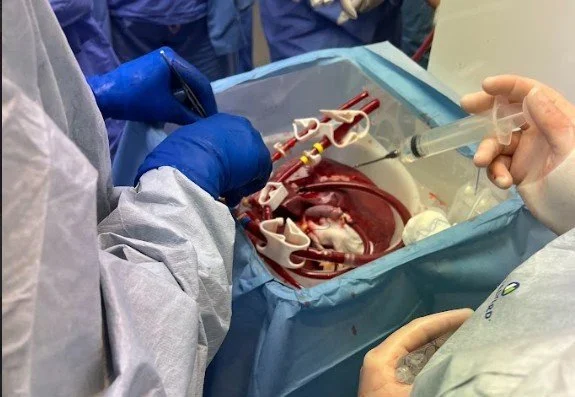
The less visible cost advantage lies in standardization. A clinical partner with documented workflows, device-agnostic training, and a consistent quality framework brings operational discipline that many programs are still working to build internally. This means fewer cases where setup variability or personnel gaps affect outcomes. It also means less administrative burden on program leadership.
An outsourced partner also brings a consistency that internal teams under overtime pressure often struggle to maintain. The standard on a routine overnight case should be the same as on a high-stakes DCD recovery. When coverage depends on fatigued staff rotating through on-call shifts, that standard drifts. A dedicated organ recovery partner holds the same bar regardless of when the case lands.
The Factors Programs Should Evaluate
When transplant administrators assess the ROI of outsourced perfusion services, a useful comparison spans several dimensions.
Coverage reliability. Can the internal team or the partner guarantee 24/7 organ perfusion coverage, including DCD cases and volume surges, without overtime dependency? Coverage gaps are not just a staffing inconvenience. They limit what the program can accept, and by extension, who the program can serve.
Device competency range. As programs expand donor acceptance, they often need perfusion support across more platforms and organ types. A device-agnostic partner maintains that range without requiring platform-specific training for every new device. That is especially relevant as machine perfusion technology continues to evolve.
Documentation and quality standards. A partner that integrates with existing documentation requirements reduces overhead. One that runs a parallel system adds to it. That distinction affects both efficiency and the program's ability to use case data for quality review.
Scalability without fixed headcount. Outsourced organ perfusion services let programs expand their coverage footprint without committing to permanent FTE additions. For programs navigating volume growth, facility expansion, or technology transitions, that flexibility has measurable value.
For a closer look at how staffing structures affect operational consistency, the transplant surgeon staffing article covers the tradeoffs between static models and layered coverage approaches in more depth.
Evaluating the Value of Perfusion Services
The ROI of outsourced organ perfusion services rarely shows up in a single line item. Instead, it shows up across coverage reliability, staffing flexibility, operational consistency, and preservation support. Programs that account for all of these factors, not just the per-case cost, tend to reach a clearer answer faster.
This is especially true when outsourced perfusion is delivered by trained preservationists, not narrow device operators. Preservationists can support the broader transplant workflow around perfusion, including organ recovery assistance, cannulation support, biopsy coordination, repackaging for declined organs, research organ handling, and rapid response when plans change.
In that model, the program is not simply buying perfusion coverage. It is gaining clinical and surgical bandwidth that helps protect surgeon time, reduce operational gaps, and support the preservation needs surrounding each case.