
The national transplant system is under sustained pressure to do more with what it has. The Organ Procurement and Transplantation Network (OPTN) set a goal of facilitating 60,000 successful transplants annually. However, reaching that target requires programs across the country to grow their capacity in meaningful ways. For many transplant centers and organ procurement organizations (OPOs), the challenge is not whether to expand their transplant services. It is how to do it without locking in fixed overhead that becomes unsustainable when volume fluctuates.
Scaling transplant services through permanent headcount additions is just one approach. It’s also the most rigid one. A more sustainable path toward growth involves identifying which functions can expand through structured external partnerships and building the operational discipline to support both.
Why Fixed Headcount Is a Blunt Instrument for Transplant Services Growth
Transplant volume does not grow in a linear direction. Case acceptance usually depends on donor availability, organ quality, recipient readiness, and OR schedule availability. None of these follows a predictable pattern. A program that hires to meet projected volume can find itself overstaffed during slow periods. Ironically, this same team can still end up understaffed during surges. While fixed headcount looks good on paper, it struggles with the fringes and when pressure-tested.
Data published by the Society for Human Resource Management indicates that over 70% of executives anticipate organizational redesigns, structural restructurings, or workforce reductions as they prioritize operational agility over blunt headcount additions. Relying solely on permanent hiring locks an organization into compounding liabilities, including comprehensive benefits, insurance, mandatory compliance onboarding, and specialized training frameworks. Consequently, organizations facing volatile, non-linear demand models find that rigid headcount allocations rapidly erode operational return on investment while undercutting workforce planning efficiency.

Unfortunately, transplant services default to fixed headcount because it feels like control. A dedicated internal team is visible, manageable, and accountable in ways that external coverage models are not. The problem is that this sense of control comes at a structural cost. As case complexity grows and machine perfusion adoption increases, the demands on that internal team grow with it. However, it does so without a proportional increase in the team's capacity to absorb them.
The operational question is not simply how many staff a program needs but how to structure coverage. The program should move at the pace of clinical demand without carrying costs it cannot sustain. Programs that answer this question well tend to grow faster and remain more resilient than those that rely solely on fixed hiring.
When Staff Scaling Goes Wrong
The OPTN set a system-wide goal of 60,000 annual transplants by 2026. Consequently, organ programs across the country face great pressure to grow as well. However, these transplant services, which simply add headcount without addressing workflow structure, often encounter predictable problems. While the coverage expanded, the consistency did not. Case in point: newer staff operate to different standards than established team members. At the same time, the quality of documentation varies per worker. As a result, handoffs between the recovering and receiving teams turn informal. Ultimately, quality review becomes difficult because cases no longer follow a shared framework.
The result is a unit that’s technically larger but operationally flat. In transplant procedures, variability at the case level has direct consequences for organ viability, recipient outcomes, and program reputation. Scaling without standardization does not promote a growth strategy. Instead, it poses a risk accumulation strategy. Catching this pattern before it becomes embedded in operations is one of the most important decisions a transplant administrator can make.
What Scalable Transplant Services Actually Require
Scaling transplant services without adding fixed headcount requires a deliberate approach to three areas: coverage architecture, workflow standardization, and partner integration.
1. Coverage Architecture
Coverage architecture means knowing exactly where internal staff are most effective and where external support fills genuine gaps. For organ recovery, this might mean using internal staff for local cases while routing fly-out and surge cases to a clinical partner. For organ perfusion, it might mean maintaining in-house competency on HMP while bringing in external support for NMP cases until internal proficiency develops. The distinction matters because it lets each layer of coverage do what it does best.
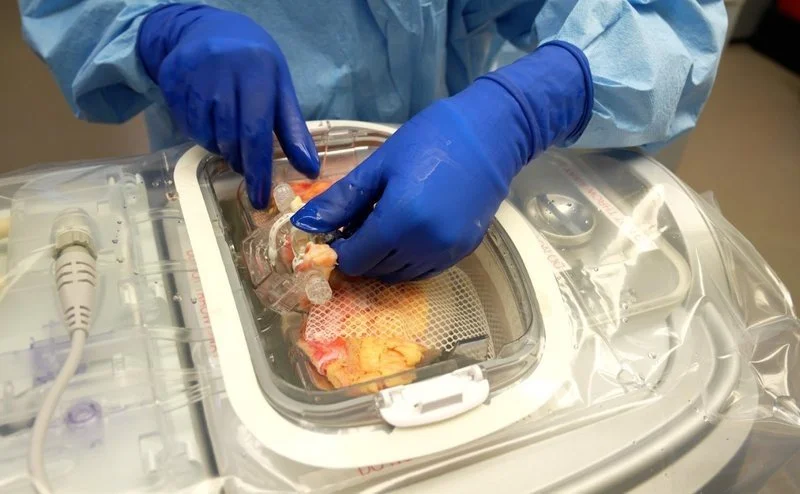
This design lets programs expand case acceptance without adding to their permanent team for every new capability. Growth absorbs through the partnership before triggering a hiring cycle. For programs that want to expand their organ recovery footprint without a proportional headcount increase, this structure is where the flexibility lives.
2. Workflow Standardization
Scalable transplant services depend on consistent workflows. When coverage shifts between internal staff and external partners, handoff points become the highest-risk moments in the case. A program with standardized protocols, documentation templates, and escalation pathways manages those handoffs reliably. A program without them cannot, regardless of individual team member performance.
Standardization also supports quality review. When cases follow a consistent structure, deviations are easier to identify and improvement becomes systematic rather than reactive. Furthermore, standardization reduces the ramp-up burden when new staff or partners come on board. It also gives program leadership better visibility into where capacity is under real pressure, instead of relying on anecdotal staff feedback to surface genuine constraints.
3. Partner Integration
The right external partner does not run a parallel system. They operate inside the program's existing structure, use its protocols, document to its standards, and hold the same quality bar on every case. This kind of integration allows transplant services to scale in response to new volume without a lengthy setup period each time coverage expands.
Integration also means that the program retains institutional knowledge across coverage changes. When staffing needs shift schedules, the partner adjusts within an established relationship rather than requiring a new onboarding cycle. For programs adding new organ types or expanding to new facilities, this continuity reduces operational risk. Similarly, it protects the quality consistency programs need to maintain as they grow. For more on how consistent staffing models support clinical execution, the organ recovery surgery article covers the human factors that technology and headcount alone cannot replace.
Where GSP Fits Into a Transplant Services Scaling Strategy
GSP supports transplant centers and OPOs as a device-agnostic clinical partner across organ recovery, organ perfusion, and advanced preservation. Our teams integrate into existing workflows, use the program's protocols, document to its standards, and scale coverage based on operational need. The program does not take on permanent headcount to make it work.
For organizations aiming to grow their transplant services responsibly, the conversation starts with an honest look at where current capacity is strong and where it’s being stretched. Contact us today, and we’ll help you develop a sound growth strategy.