
Expanding Capacity for High-Risk Solid Organ Transplant Recovery
Demand for solid organ transplant continues to outpace donor supply. As a result, programs are now looking more carefully at organs they would previously have declined. Extended-criteria donors, DCD cases, and high-risk anatomical recoveries, in fact, represent a growing share of case volume. Experienced programs are taking these cases on, but expansion requires more than clinical willingness. It requires infrastructure.
Programs that want to grow solid organ transplant volume, therefore, face real operational questions. Staffing models, perfusion coverage, equipment access, and consistent training directly determine whether a program can sustain expanded capacity. Without the right infrastructure in place, growth remains aspirational.
Why Solid Organ Transplant Cases Demand More Infrastructure
High-risk solid organ transplant recoveries operate differently from standard cases. The margin for error narrows, the number of moving parts increases, and coordination demands extend well beyond the OR. Programs that treat these cases as slightly harder versions of routine recoveries, as a result, tend to run into predictable problems.
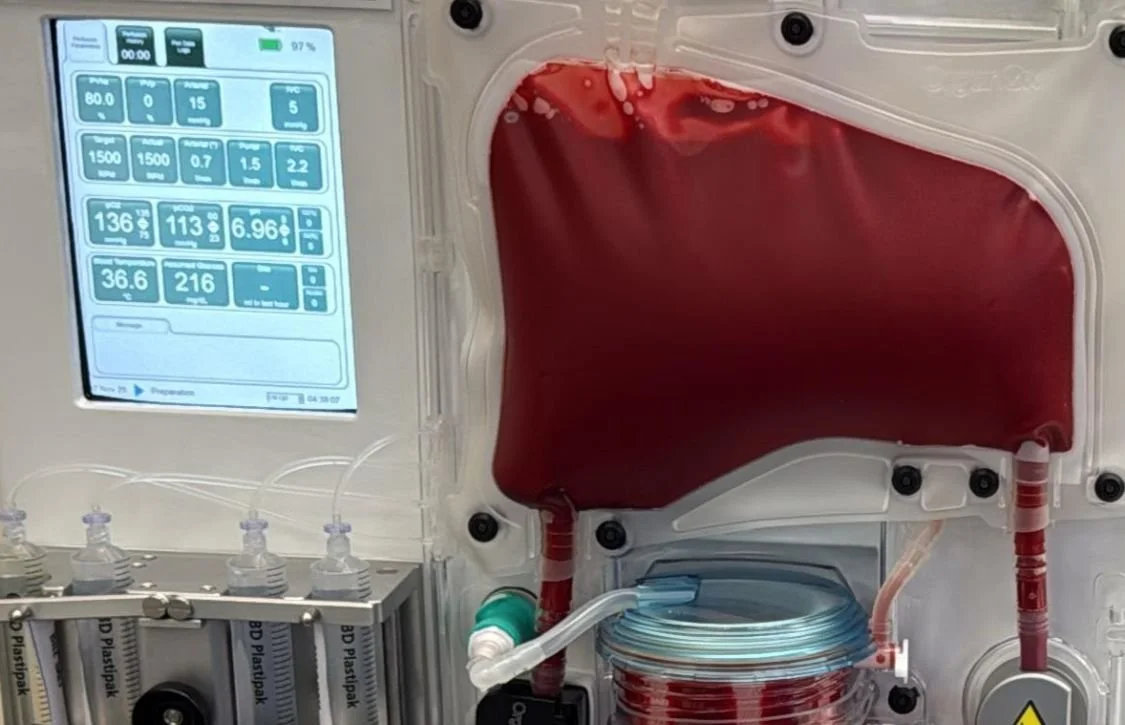
The infrastructure requirements for solid organ transplant expansion fall into three overlapping categories: clinical and logistical complexity, machine organ perfusion capability, and personnel readiness. Each one shapes whether a program can absorb expanded case volume without compromising quality. Understanding how they interact, therefore, is the starting point for any honest capacity assessment.
• Clinical and Logistical Complexity
◦ Decision-making requires more nuance and speed than standard recoveries demand.
◦ Coordination between procurement, perfusion, transportation, and the receiving OR must tighten accordingly.
◦ When any element fails, the consequences escalate quickly.
• Machine Organ Perfusion Requirements
◦ Programs increasingly use HMP for DCD donor kidneys to reduce delayed graft function risk and provide real-time viability data.
◦ NMP, meanwhile, offers a liver assessment platform that cold storage alone cannot match.
◦ Both modalities require trained personnel who can manage equipment, interpret data, and respond to clinical events.
• Personnel and Training Standards
◦ Perfusion coverage for high-risk cases cannot rely on staff unfamiliar with the equipment.
◦ Training consistency across all personnel directly determines whether expanded capacity holds up.
Research published in the American Journal of Transplantation supports the growing clinical adoption of machine organ perfusion in DCD and extended-criteria donor scenarios, reinforcing why solid organ transplant programs need this infrastructure in place before scaling case volume.
Measuring Readiness Before You Expand
Before expanding into high-risk solid organ transplant recovery, programs need an honest operational assessment. Surgical capability alone is not enough. Here are the questions every program should be able to answer.
• Key Readiness Questions
◦ Who provides perfusion coverage at 2 AM on a holiday weekend?
◦ What happens when the primary perfusion specialist is unavailable and a complex DCD case is called?
◦ Does your team have a written protocol for every clinical scenario it is likely to encounter?
• What Readiness Gaps Look Like
◦ A clinical services partner fills staffing coverage gaps directly.
◦ Structured training closes device competency gaps systematically.
◦ A workflow development process targets and resolves documentation gaps.
• Why Sequence Matters
◦ Operational infrastructure should be built in parallel with, or ahead of, any increase in case volume.
◦ Quality events, staff burnout, and case cancellations are the cost of getting this sequence wrong.
◦ Identifying gaps before expansion gives programs the opportunity to solve them on their own terms.
Programs that cannot answer these readiness questions with confidence are not yet positioned to expand sustainably. That does not mean expansion is off the table. It means the infrastructure needs to come first.
The Staffing Reality for Expanded Capacity
Expanding solid organ transplant capacity for high-risk cases requires clinical personnel who are available at unpredictable hours, competent on multiple perfusion platforms, and able to function at a high level in demanding, logistically complex environments.
This is a difficult profile to hire and retain internally, especially for programs that are not yet running high enough NMP or HMP volume to justify a dedicated full-time team. The math rarely works in the early stages of expansion, and the risk of underutilized headcount is real.
Successful expansion typically follows one of three staffing models. A full in-house team is viable for high-volume programs with the budget and case volume to justify dedicated FTE headcount.
A hybrid model pairs internal staff with an external clinical partner that covers overflow, nights, and weekends, giving programs flexibility without abandoning internal ownership.
An outsourced coverage model relies on an experienced clinical services partner to provide most or all perfusion and recovery support on a flexible basis, which suits programs still validating long-term volume.
For programs in growth mode, the hybrid or outsourced model often provides the fastest path to expanded capacity without the financial and operational risk of building a full internal team before volume justifies it. Sequencing the staffing model to match actual case growth protects both budget discipline and clinical quality.
Device-Agnostic Expertise as a Requirement
High-risk solid organ transplant recovery often involves equipment from multiple manufacturers, and the specific platform used may vary based on donor type, organ, institutional preference, or surgeon familiarity. A clinical team that is competent on only one perfusion device is a limiting factor for programs seeking to expand their case mix.

Device-agnostic expertise, the ability to operate and manage multiple NMP and HMP platforms equally well, is a genuine differentiator for clinical services partners working in this space. Programs are not locked into a particular technology path and can adapt as clinical evidence and market options evolve. It also reduces operational risk when device availability or institutional preferences shift over time.
Training and Competency Across Expanded Case Types
Expanding into higher-risk solid organ transplant recovery without a corresponding investment in training creates clinical risk. Teams need structured onboarding for each perfusion platform, case-by-case documentation that supports competency verification, and regular review processes to maintain proficiency. This is especially important when clinical partners or per diem staff are integrated into the recovery team.
Programs should establish clear competency standards before adding new case types, not after. The quality of the first few high-risk cases often sets the operational pattern for everything that follows, and first impressions with referring OPOs and surgical teams are difficult to reverse.
Making Expansion Sustainable
Sustainable expansion in solid organ transplant recovery requires matching clinical ambition with operational infrastructure. Programs that move too quickly without the right staffing model, equipment access, or documentation systems often find themselves unable to maintain the quality and reliability that a growing case mix demands. The programs that grow most successfully are those that treat each expansion phase as an opportunity to strengthen their systems, not just their case volume.
A phased approach, starting with supported expansion of one organ type or one case category before broadening further, gives programs the time to build competency and refine workflows before volume requires it.
Ready to evaluate how your program can expand solid organ transplant recovery capacity with the right clinical support in place? Contact Gold Standard Preservation to get started.