
Beyond Delivery: The Role of Clinically-Informed Medical Logistics Companies
Medical logistics companies move everything from pharmaceuticals to time-critical biological materials across state lines. What many medical logistics companies do not account for, however, is that transplant logistics is not simply a delivery problem. It is a clinical problem with a logistics component, and the word "logistics" understates what the work actually requires.
Operating without clinical knowledge creates risks that general logistics expertise cannot anticipate or mitigate. Transplant administrators and OPO leadership evaluating vendor relationships need to understand exactly where that line is drawn.
Why the Stakes Are Higher in Transplant Logistics
Most medical logistics problems are recoverable. Organ transport problems are not. A late pharmaceutical shipment can be reissued, and a delayed lab sample can be redrawn. A damaged medical device can also be replaced through standard supply channels. None of those recovery paths exist once an organ has been recovered from a donor. The clock starts at cross-clamp and does not stop, which puts transplant logistics in a category of its own.
The Risk Environment Is Unique
Ischemia time sensitivity leaves no margin for delays or mismanagement. Every minute added to cold or warm ischemia, in fact, has clinical consequences at implantation. Moreover, donor organs are irreplaceable, which means there is no reorder path, no substitute shipment, and no acceptable workaround when a transport goes off-plan.
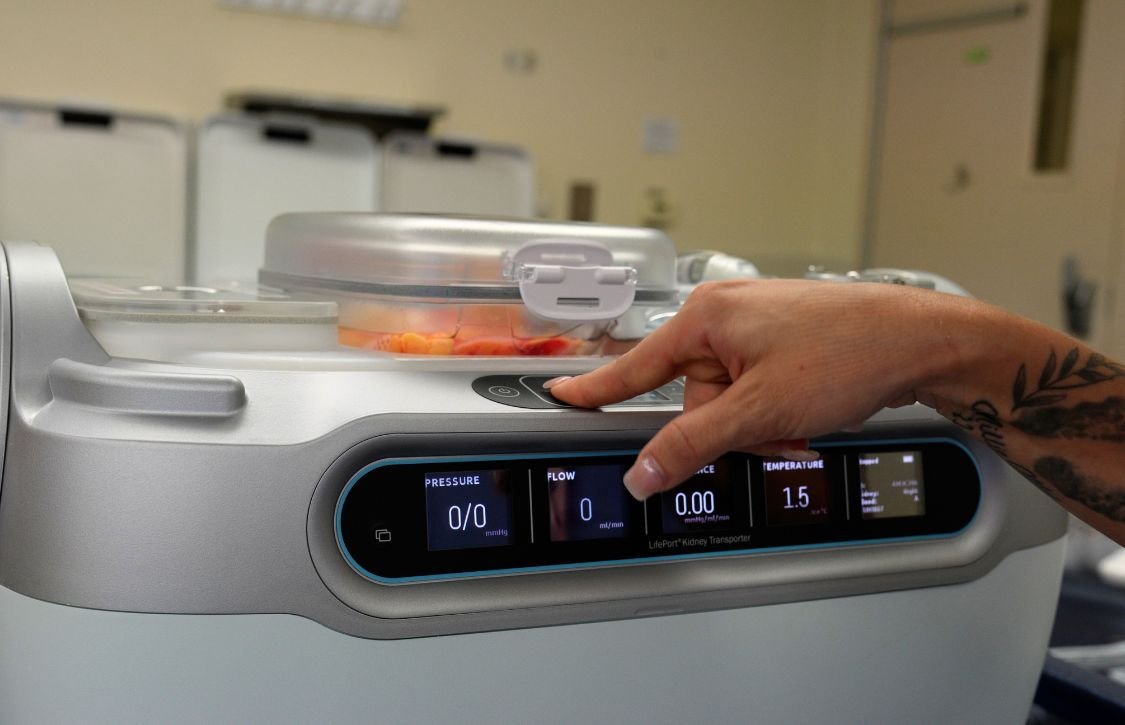
Machine-perfused organs in transit, meanwhile, add another layer, since equipment monitoring, troubleshooting, and clinical interpretation happen in real time. Standard couriers, however, do not carry the training to manage those variables, and most medical logistics companies are not built around this level of clinical complexity.
The Right Partner Looks Different
Transplant programs need clinical depth in their transport partners, not just temperature compliance records and on-time delivery statistics. General logistics experience, in fact, does not translate into the judgment required during a DCD recovery. That judgment matters just as much in a marginal donor case.
Defined protocols for organ-specific scenarios matter as much as general operational competence, because the failure modes are organ-specific. As a result, operational accountability in this space comes from genuine clinical expertise, not from the standard playbook that most medical logistics companies rely on. This is the same cross-platform equipment competency that separates a true clinical partner from a vendor dashboard.
The Difference Shows Up in Real Outcomes
Ischemia times ultimately reflect how well the logistics partner manages time-critical handoffs across procurement, transport, and receiving teams. Documentation completeness, meanwhile, depends on personnel who understand what they need to capture and why it matters. That understanding also shapes how quality review teams use the documentation.
The receiving clinical team, as a result, can move faster and with more certainty during handoffs. This happens when the transport includes complete perfusion data, clear timing records, and clinical observations from someone who understood the case. That kind of consistency also depends on staffing. The ongoing talent gap in organ perfusion roles shapes that area, since transport partners need trained personnel available to embed in these handoffs.
What Standard Medical Logistics Companies Do
Most medical logistics companies excel at what they are designed to do. Efficient routing, time-sensitive delivery, chain-of-custody documentation, and regulatory compliance for biological specimens are core strengths. These are legitimate capabilities, and they matter in transplant.
What they typically do not include, however, is clinical judgment about organ condition. They also lack the ability to manage a perfusion device in transit. They cannot recognize or respond to a clinical problem during transport.
When a kidney on hypothermic machine perfusion shows an unexpected change in resistance values, a logistics specialist cannot interpret that data. A trained organ perfusion professional, on the other hand, can.
The Clinical Gap in Traditional Logistics Models
The gap between logistical competence and clinical competence becomes most visible in complex or extended transport scenarios. These include:
• Machine-perfused organs (NMP or HMP) where the device must be actively monitored throughout transport
• Long-distance or multi-leg transport where organ condition may change and clinical judgment is required
• High-risk or marginal donor organs where quality signals during transport are decision-relevant
• Cases where coordination with the receiving transplant team requires clinical communication, not just logistical updates
In each of these situations, a clinically-informed team member changes the risk profile of the transport. They are not just moving the organ; they are managing it. The practical implication is that the quality of the transport partner directly affects the quality of what the receiving team has to work with at implantation.
What Clinically-Informed Medical Logistics Companies Bring to the Table
A clinically-informed medical logistics partner, or a clinical services organization with integrated logistics capability, brings a different operational model to transplant support.

The defining characteristics include:
• Trained Clinical Personnel - Staff who understand organ perfusion and preservation are able to make real-time judgments during transport that a general logistics professional cannot. This includes recognizing perfusion data trends, maintaining proper equipment function, and communicating meaningfully with transplant teams about organ status.
• Integrated Protocols - Clinical and logistical protocols develop together, not in parallel silos. Ischemia time tracking, temperature monitoring, communication checkpoints, and documentation standards are crucial frameworks in the operational model.
• Device-Agnostic Competency - Programs use different perfusion platforms. Clinically-informed partners who are device-agnostic can support transport across multiple technologies without requiring a separate vendor relationship for each device.
• After-Hours Reliability - Organ recovery happens at all hours. Clinical logistics support must too. Organizations that provide genuine 24/7 clinical availability, not just logistical on-call, close the reliability gap that programs relying on ad hoc arrangements frequently encounter.
Evaluating Medical Logistics Companies for Transplant Support
When transplant programs or OPOs are evaluating medical logistics companies for organ transport support, the evaluation criteria should go beyond standard logistics metrics. Key questions include:
• Does the vendor employ clinical personnel, or only logistical staff?
• How does the team manage perfusion equipment in transit?
• What communication protocols connect field staff with the receiving transplant center?
• What does documentation at handoff look like, and who is accountable for its accuracy?
• How does the organization handle after-hours coverage and surge situations?
A vendor that cannot answer these questions with specific protocols and trained personnel provides a general logistics service, not a clinically-informed one. The evaluation process itself is revealing. Partners with genuine clinical depth answer these questions quickly and specifically because the answers are built into how they operate.
The Strategic Value of Getting This Right
Transplant programs that establish partnerships with clinically-informed medical logistics support gain more than operational reliability. They gain a partner that can grow with them as case volume increases and technology evolves. The investment in a higher-quality logistics relationship pays dividends in reduced clinical risk, better team experience, and more consistent organ quality at implantation.
Programs that transition from a general logistics vendor to a clinically-informed partner often simplify their operational structure in the process. Instead of managing separate relationships for logistics, clinical coverage, and perfusion equipment support, they work with a single partner whose expertise spans all three. That integration reduces coordination overhead and creates clearer lines of accountability across the entire transport process.
To learn more about how clinically-integrated logistics support can change the operational profile of your program, reach out to the Gold Standard Preservation team. Contact Gold Standard Preservation to get started.