
Selecting the Right Partner for Transplant Transportation Services
Choosing a partner for transplant transportation services shapes every case your program runs after the contract is signed. The right partner protects ischemia budgets, standardizes handoffs, and gives your surgical team a predictable clinical input on every recovery. The wrong one becomes another coverage gap you spend nights and weekends working around.
You already carry the weight of scaling volume without adding full-time internal FTEs. A transportation partner should reduce that weight, not add procurement headaches, documentation gaps, or last-minute scrambles for backup coverage. The evaluation criteria you use during selection determine whether logistics becomes a controlled variable or a recurring source of operational strain.
What Should You Look for in a Transplant Transportation Services Partner?
A strong transplant transportation services partner combines 24/7 operational readiness, credentialed clinical support, standardized documentation, and device-agnostic infrastructure across every recovery. Look for board-certified specialists at the operating table, real-time viability data streaming to receiving teams, and proven high-volume execution across recovery and organ perfusion. Your partner should function as clinical infrastructure, not a vendor.
Core Criteria for Evaluating Transplant Transportation Services Partners
Partner selection starts with the criteria you refuse to compromise on. Ischemia protection, credentialed personnel, and 24/7 operational readiness sit at the top of that list for every serious program. The partners worth your time can prove each one with case data, not talking points.
Look for evidence of consistent execution across recovery, organ perfusion, and handoff, not just transit. A partner that treats transportation as a courier task will leave gaps that surface later in the recipient OR. Your evaluation should surface how the partner handles the clinical work that surrounds the drive itself.

A multicenter RCT published in NEJM reported that machine perfusion was not performed in 27% of assigned kidney cases due to logistics and graft-handling issues, with one organ lost to perfusion malfunction. Transplant transportation services partners either solve for that operational reality or become part of it.
The strongest partners document every decision, every timestamp, and every handoff in a shared record your quality team can audit. Predictable documentation is the foundation everything else builds on.
Operational Capabilities That Separate Reliable Partners From the Rest
Operational capabilities are what separate a marketing deck from an actual clinical partner. You want a partner with real dispatch depth, credentialed drivers, and vehicle infrastructure sized for perfusion pumps and clinical teams during transit. Ask for coverage maps, response-time medians, and backup protocols before the conversation moves any further.
Data handling is another capability that gets overlooked until it fails during a live case. Your transplant transportation services partner should stream perfusion parameters, ischemia times, and in-transit alerts directly to your receiving team. Real-time visibility shortens decision cycles and cuts surprises at the receiving center.
Device-agnostic support matters more every year as new preservation systems enter the market. A partner locked into one hardware vendor limits your program's flexibility on device selection and case planning. Look for partners who support current and emerging platforms with the same clinical rigor across every case.
Finally, evaluate how the partner handles overnight, weekend, and volume surge coverage without leaning on your internal FTEs. Coverage gaps during high-volume weeks are where the wrong partner costs you organs. A capable partner absorbs those spikes as part of the service, not as an escalation.
Red Flags to Watch for When Vetting Transplant Transportation Services Vendors
Some warning signs surface early if you know what to ask. Vetting transplant transportation services vendors deserves the same rigor you apply to clinical hires, because a weak partner touches every case your program runs. The following red flags should stop the conversation cold.
• No Board-Certified Clinical Support: A vendor without ABTC, CSFA, CST, or CPBMT credentials on staff is offering transport, not clinical partnership across recovery and organ perfusion.
• Vague Coverage Guarantees: Vendors that cannot document response-time medians, dispatch depth, or backup vehicle protocols will leave you exposed during nights and weekends.
• Device Lock-In: Partners tied to a single preservation platform limit your program's device flexibility and force you into vendor-driven case planning.
• Documentation Gaps: Missing timestamps, unclear handoff records, or fragmented data across systems signal a vendor unprepared for accreditation and payer scrutiny.
• No Real-Time Data Streaming: Vendors that cannot deliver ischemia times and perfusion parameters to your receiving team in real time force your surgeons to make decisions on stale information.
Any single red flag should trigger deeper questions before you sign. Two or more, and you should walk. Preservation logistics choices carry measurable downstream weight, and a GUARDIAN registry analysis in the ASAIO Journal found severe primary graft dysfunction of 5.7% under advanced preservation transport versus 16.1% under wet ice-based storage in heart transplant.
How Board-Certified Clinical Support Strengthens Every Transportation Handoff
The right partner turns every handoff into a clinical event ready for the OR the moment the vehicle arrives. Gold Standard Preservation deploys board-certified specialists holding ABTC, CSFA, CST, and CPBMT credentials to support recovery, organ perfusion, and handoff at the operating table. Board-certified expertise at the operating table means your surgeons meet a prepared clinical partner, not another gap in the workflow.
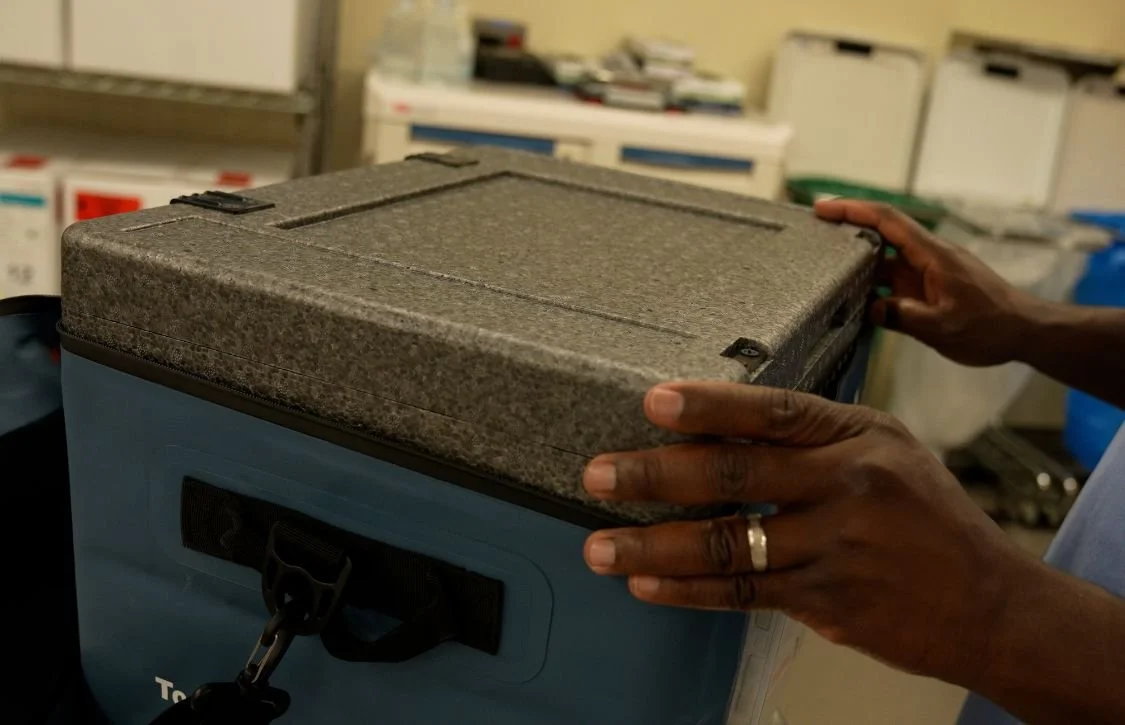
The direct benefit is a tighter, more predictable handoff on every case your program runs. GSP averages roughly 50 cases per month per center, which translates into pattern recognition and reliable execution when timing windows tighten unexpectedly.
Specialists track organ viability metrics, record ischemia times in real time, and stream data directly to receiving transplant teams during hypothermic and normothermic organ perfusion. Coordinators and surgeons see the same numbers at the same time, which cuts decision cycles at the receiving center. Real-time data pairs naturally with the transport timing your logistics program already captures.
Device-agnostic clinical flexibility lets GSP support your program across current and emerging preservation systems without vendor lock-in. Your team keeps device choice, and the clinical execution stays consistent across every case. The result is a partner model that treats transportation and bedside readiness as one continuous clinical workflow.
Ready to Rethink Your Transportation Partner Strategy?
Partner selection shapes every recovery your program runs, and the wrong choice compounds quietly across dozens of cases per year. Programs that pair credentialed clinical support with reliable transportation infrastructure protect ischemia budgets, cut documentation gaps, and give surgeons a predictable handoff every time. The right partner turns logistics from a recurring risk into a controlled clinical input.
Gold Standard Preservation partners with transplant centers and OPOs nationwide to deliver device-agnostic clinical support. We provide standardized workflows and 24/7 operational readiness across recovery and organ perfusion. Contact our team to start a conversation about the clinical infrastructure your next partnership should deliver.