
Addressing Workforce Burnout in Critical Transplant Jobs
Transplant staffing burnout carries costs far beyond individual well-being across every service line. Organ perfusion, organ recovery, preservation, and after-hours support all depend on people performing under real-time pressure. Burnout becomes a coverage risk, a quality risk, and a retention risk at once.
The World Health Organization defines burnout as an occupational phenomenon from chronic unmanaged workplace stress. WHO identifies three dimensions: exhaustion, cynicism toward work, and reduced professional efficacy. WHO classifies burnout as occupational, not medical. [1]
Why Transplant Jobs Carry Elevated Burnout Risk
Most transplant jobs run outside predictable schedules by design. A specialist may get called overnight, on a weekend, or right after a demanding case. The work carries genuine meaning, but meaning alone does not erase fatigue.
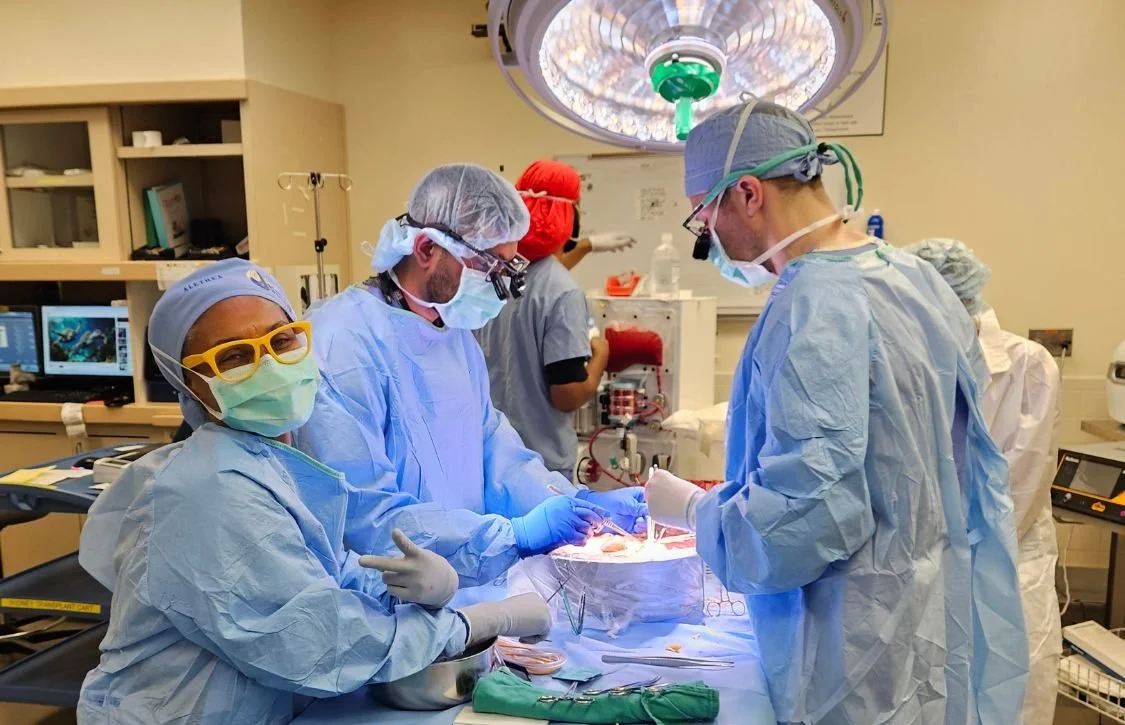
Burnout risk rises when three specific pressures overlap:
• Unpredictable call schedules
• Thin staffing depth
• High-stakes clinical responsibility
Small teams often carry every case type, every device platform, and every urgent activation. When the same people absorb the hardest cases, the schedule becomes a survival plan.
Peer-reviewed research supports the concern directly. Rotenstein and colleagues, publishing in the Journal of General Internal Medicine, found work overload raised healthcare burnout risk 2.2 to 2.9 times. Intent to leave rose 1.7 to 2.1 times under the same overload conditions. [2]
For transplant programs, one resignation weakens call coverage, slows training, and raises overtime pressure. The remaining team moves closer to the same breaking point.
How Burnout Shows Up Before Someone Leaves
Burnout rarely appears first in a resignation letter. Warning signs surface through changes in behavior, engagement, and reliability. Leadership can catch these signs early with the right attention.
A 2025 Frontiers synthesis of 45 studies organizes early signs into three domains. Intrapersonal signs include persistent fatigue, impaired concentration, and poor sleep. Interpersonal signs show up as irritability, reduced empathy, and dissatisfaction. Occupational signs include absenteeism, tardiness, and overcommitment despite apparent productivity. [3]
In transplant jobs, those signs often look like:
• More last-minute call-outs or difficulty covering shifts
• Less engagement in training, competency review, or cross-training
• Shorter tempers during high-pressure cases
• Reduced willingness to pick up extra coverage
• Delayed communication or slower response times
• Loss of interest in process improvement or case review
None of these signs automatically means burnout. However, a pattern matters far more than any single moment. Programs waiting for exit interviews to ask about workload are asking too late.
Burnout Is an Operational Issue, Not Just a Personal One
The transplant field attracts people who care deeply about the mission. Commitment strengthens programs but can also hide fatigue. Mission-driven staff keep pushing long after the schedule has become unsustainable.
APA's 2024 Work in America survey found 67% of workers reported at least one burnout-related outcome in the prior month. Reported outcomes included low energy, lack of motivation, isolation, and reduced effort. Experiencing one outcome does not automatically meet WHO's burnout criteria. However, the data still points to a broad workplace problem. [4]
APA also found workers with higher psychological safety reported better workplace experiences. Workers with lower psychological safety were far more likely to describe their workplace as toxic. [4]
Psychological safety matters because staff need to speak up before failure occurs. A preservationist should feel able to flag an unsustainable schedule. A manager should feel able to say coverage is filled but exhausted. Psychological safety protects standards rather than lowering them.
Why Thin Staffing Creates a Cycle
Thin staffing depth drives most transplant burnout situations. A program may look covered on paper while depending on the same three people for every surge and complex case. The model works until it does not. When one experienced person leaves, the remaining team covers the gap immediately. The added burden raises the odds that another person disengages next.
Recruitment and training take months in specialized roles like organ perfusion. The result becomes a self-reinforcing cycle:
1. The team runs lean.
2. Staff absorb more call and complexity.
3. Burnout signs appear.
4. One person leaves.
5. The remaining team absorbs even more.
6. The program becomes harder to stabilize.
Burnout prevention cannot be a one-time wellness initiative. Prevention has to be built into the coverage model itself.
What Sustainable Transplant Staffing Looks Like
A sustainable staffing model does not remove pressure from transplant work. The work will always be urgent, technical, and emotionally significant. The goal is preventing preventable strain from becoming the default operating model.

Programs reduce burnout risk by focusing on five specific areas.
1. Build Real Coverage Depth
Coverage should not depend on one or two indispensable people. Programs need enough trained staff for routine cases, surge volume, vacations, and complex activations. Nobody should carry the entire schedule alone.
Smaller programs and thin talent markets often benefit from a hybrid model. Internal staff maintain program continuity while an external clinical partner supports overflow and after-hours coverage.
2. Cross-Train Across Platforms and Case Types
When only one person can operate a device or handle a workflow, the program carries concentration risk. Cross-training spreads responsibility across more people and reduces pressure on any single specialist.
Cross-training matters especially for programs using multiple preservation technologies. A device-agnostic staffing approach prevents coverage gaps when case demand shifts between platforms.
3. Protect Time Off
Time away from call has to be real to work as recovery. A staff member technically off but still answering questions is not recovering. Protected time off gives staff the ability to reset before returning to high-stakes work. Leadership signals through protected time that burnout prevention is a quality issue, not a favor.
4. Watch Leading Indicators
Leaders should track burnout risk before it becomes turnover. Useful indicators include call-out patterns, schedule complaints, training participation, response delays, and case behavior changes.
Regular check-ins should ask direct operational questions:
• Is the current call load sustainable?
• Are there case types or devices creating repeated strain?
• Are people getting uninterrupted time off?
• Is coverage technically filled but practically unsafe?
• What would make the schedule more sustainable?
Questions like these are operational, not soft.
5. Use Clinical Partnerships Strategically
An external clinical partner should not function as a last-minute staffing patch. Used correctly, a partner stabilizes coverage, supports surge demand, and widens platform competency. Programs treating a partner as a strategic layer tend to see steadier internal retention as well.
GSP's Clinical Partnership Model for Transplant Program Coverage
Gold Standard Preservation supports transplant programs through a device-agnostic clinical model. Specialists cover organ recovery, machine organ perfusion, and preservation workflows nationally. Coverage runs 24/7, absorbing overflow and after-hours cases without pulling internal staff into overtime rotations.
Transplant specialists hold ABTC, CSFA, CST, and CPBMT certifications across the clinical team. Case volume averages 50 per month per center across recovery and machine organ perfusion. Standardized workflows and precise documentation stay consistent regardless of which preservation device the program uses.
Device-agnostic flexibility matters more as new organ perfusion platforms enter the market. Programs benefit from a partner fluent across all devices rather than locked into one manufacturer. Coverage scales up or down based on actual case demand.
Build a Coverage Model That Protects Both Patients and Staff
Workforce burnout shapes staffing stability, training continuity, case readiness, and program reliability. Programs treating burnout as operational rather than personal build stronger foundations for retention. Discipline in the coverage model separates programs that stay stable from those constantly reacting to turnover.
Technology, devices, and protocols matter, but none replace a sustainable team behind the work. Transplant programs need coverage built for unpredictable hours, high stakes, and consistent execution case after case. Contact Gold Standard Preservation to discuss how a clinical partnership can help reduce burnout risk and strengthen your program's coverage model.
Sources
[1] World Health Organization. (2019, May 28). Burn-out an occupational phenomenon: International Classification of Diseases. https://www.who.int/news/item/28-05-2019-burn-out-an-occupational-phenomenon-international-classification-of-diseases
[2] Rotenstein, L. S., Brown, R., Sinsky, C., & Linzer, M. (2023). The association of work overload with burnout and intent to leave the job across the healthcare workforce during COVID-19. Journal of General Internal Medicine, 38(8), 1920-1927. https://www.ncbi.nlm.nih.gov/pmc/articles/PMC10035977/
[3] Seeing burnout coming: Early signs and recognition strategies in health professionals. (2025). Frontiers in Public Health. https://www.ncbi.nlm.nih.gov/pmc/articles/PMC12689927/
[4] American Psychological Association. (2024, June). APA poll finds younger workers feel stressed, lonely and undervalued. https://www.apa.org/news/press/releases/2024/06/younger-workers-stressed