
Ensuring Operational Readiness for Emergency Organ Perfusion Pump Deployment
Organ perfusion pump deployment does not wait for convenient timing. A call comes in, a case accelerates, and the team has minutes to stage the right equipment, prep the perfusate, and put a trained clinician on the circuit. Programs that treat perfusion pump readiness as a background concern discover its importance at the worst possible moment.
What an Emergency Perfusion Pump Deployment Actually Looks Like
Most perfusion pump failures in the field are not due to the equipment. They are preparation and competency failures. Equipment was not staged correctly. Perfusate was not ready. The escalation path was unclear. Each of those is a solvable problem before the case. None of them are easy to solve during one.
Emergency organ perfusion pump deployment means the team can move from notification to a running, monitored circuit within a defined window, regardless of the hour or complexity. That requires three things working together: the right equipment in the right condition, a trained clinician, and a protocol that covers every decision point from staging through handoff. Most programs have the first. Fewer have all three.
Why Perfusion Pump Readiness Is Harder Than It Seems
A perfusion pump is a complex piece of clinical equipment. Setup requires correct cannulation, perfusate preparation, circuit priming, and parameter confirmation before the organ connects. Each step has a defined sequence. Skipping any of them introduces risk that compounds once the organ goes on circuit or delays going on circuit, increasing cold ischemic and static cold times.
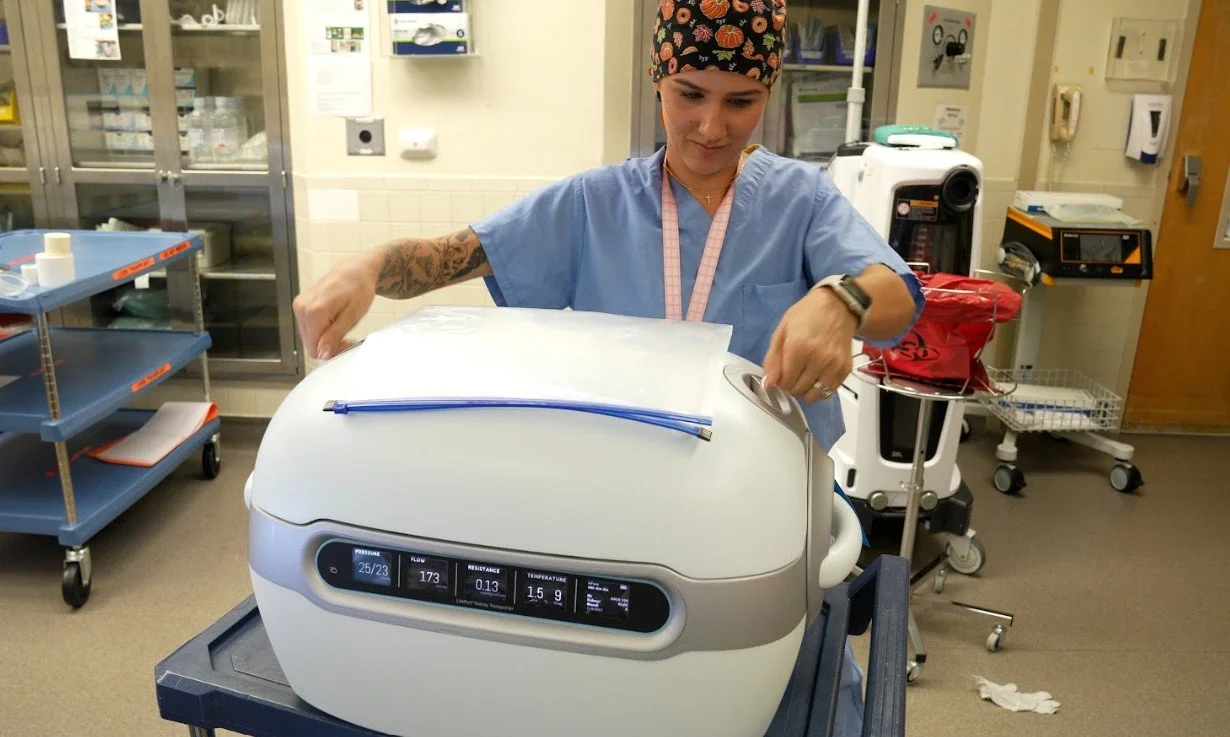
That complexity multiplies under unplanned conditions. An on-call clinician responding to a late-night DCD case at an unfamiliar facility faces a different set of demands than a scheduled daytime perfusion run. Equipment may be in a different configuration. The surgical team may have different expectations. Transport timelines may have shifted. Readiness means the clinician adapts to those variables without sacrificing the setup standard.
Furthermore, device-agnostic readiness adds another layer. Programs running more than one perfusion pump platform, or working with clinical partners covering multiple centers, need personnel who operate across platforms with equal confidence. A clinician trained on a single device is not interchangeable across a program that uses two.
The Operational Framework Behind Reliable Deployment
Reliable deployment of perfusion pumps does not come from good intentions. It comes from a documented framework that addresses each stage of the workflow.
Equipment Staging and Maintenance
Where is the pump? What is its current maintenance status? When was it last validated? These are not administrative questions. They determine whether the device is ready when the call comes in. Programs that track this information systematically deploy quickly. Programs that rely on individual memory do not.
Perfusate Preparation Standards
Perfusate composition for hypothermic machine perfusion (HMP) and normothermic machine perfusion (NMP) differs. Each has a defined starting point, and both require adjustments based on organ response. A documented protocol means the on-call clinician does not have to rebuild the approach from memory at two in the morning.
Role Clarity for the Responding Team
Primary pump management, documentation, and communication with the recipient surgical team each need a named owner before the case starts. In a planned case, roles get assigned in advance. In an emergency deployment, they still need an assignment, just faster. Teams with pre-defined roles make that transition without confusion.
Escalation and Communication Pathways
What happens if a parameter falls outside the acceptable range? What is the notification chain if the case changes scope mid-run? These questions need documented answers. Instead of improvising under pressure, teams need a clear escalation path that they have practiced.
Handoff Protocols
Deployment does not end when the organ leaves the circuit. It ends only when the recipient room has the correct organ, documentation is complete, and the chain of custody is flawlessly intact. Handoff is the ultimate test of operational discipline—it is where weak processes fail and strong preparation pays off.
Where Most Programs Encounter Gaps
The Organ Procurement and Transplantation Network (OPTN) and its member programs operate under increasing pressure to reduce variability across transplant workflows. Perfusion pump deployment is one area where that variability tends to be highest. It sits at the intersection of equipment management, clinical skill, and real-time coordination, and all three have to work together for a deployment to go well.
The most common gap is not technical. It is the assumption that device training equals deployment readiness. It does not. A clinician who can run a pump in a controlled setting may still struggle with setup under time pressure at an unfamiliar site. They may also have difficulty managing perfusate adjustments when the organ is not responding as expected or maintaining documentation while actively managing a circuit. Programs may also carry informal assumptions about who covers the perfusion pump when primary staff are unavailable. That kind of ambiguity is manageable until it is not. A surge case, a staffing gap, or a last-minute organ acceptance can expose it quickly.
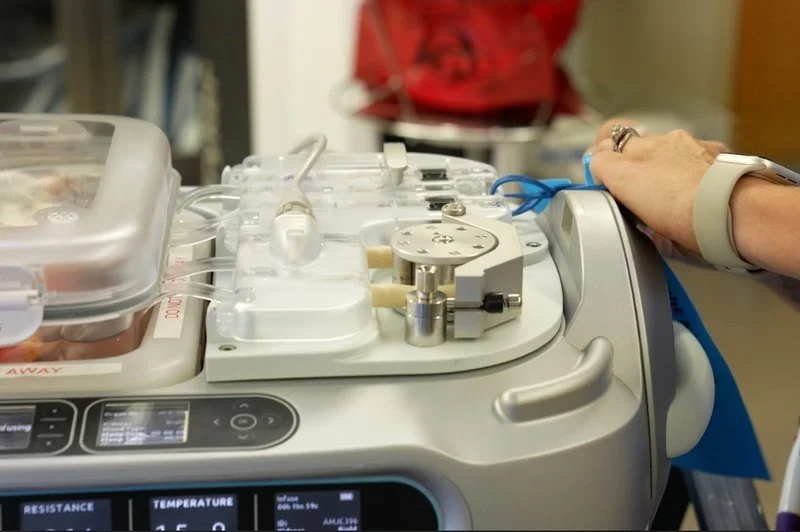
Closing that gap requires simulation-based training for high-pressure scenarios and clear role definitions before the case begins. It also requires a competency framework that validates deployment readiness, not just device familiarity. For that reason, our organ perfusion training programs move teams from device-level competency to full operational readiness across the entire deployment workflow.
Building Consistent Perfusion Pump Coverage
Programs that want reliable organ perfusion pump coverage without building full internal capacity for every shift have a practical option: a clinical partner with trained personnel and a documented deployment framework that matches existing program protocols.
The right partner integrates into what already exists. They use the program's equipment and documentation standards and hold the same quality bar on every case. That kind of support is especially valuable for programs managing volume surges, expanding to new facilities, or covering staffing gaps during high-demand periods. Similarly, it helps programs that have acquired new perfusion pump technology and need experienced personnel while internal competency develops. For more on how staffing models affect operational consistency, our transplant surgeon staffing article covers how layered coverage structures absorb both staffing and technology variability.
Deployment readiness is not a one-time checklist. It is a sustained operational standard, and it shows in every case. If your program needs more consistent organ perfusion pump coverage, contact us to discuss what that looks like in practice.