
Transplant centers are under real pressure to expand organ perfusion coverage without expanding fixed overhead. Machine perfusion is now standard practice for liver and kidney programs, and the demand for qualified, available personnel has grown alongside it. Coverage must be ready around the clock. The team executing organ perfusion must be trained, credentialed, and able to step into a surgical workflow on short notice. For a growing number of programs, building and sustaining that capacity entirely in-house is no longer the most practical path forward.
The Staffing Reality Behind Coverage Gaps
Transplant programs often run on irregular schedules. Organ availability does not follow business hours. A perfusion coverage gap at 2 a.m. on a weekend carries the same clinical weight as one during the day. Yet staffing for that kind of coverage internally is expensive and hard to sustain.
In reality, many transplant programs face several compounding pressures:
Qualified perfusion personnel are in short supply across the field
Retaining experienced staff through nights, weekends, and high-volume periods is a persistent challenge
Turnover creates training gaps that take time and resources to close
Surge volume is unpredictable and difficult to plan fixed headcount around
As a result, many programs find themselves stretched beyond what’s necessary. Coverage exists on paper but becomes unreliable in practice. When a case arrives outside normal hours and available personnel are fatigued or undertrained, the program absorbs that risk directly. It affects surgical scheduling, coordinator workload, and sometimes whether a case moves forward at all.
Outsourcing organ perfusion support addresses this directly. It brings in a dedicated external team built for on-demand, around-the-clock coverage. Furthermore, it removes that burden from internal staff who are already managing competing demands.
What a Dedicated Clinical Partner Delivers
There is a meaningful difference between a staffing agency placement and a dedicated clinical services partner. A staffing placement fills a seat. A clinical partner, however, brings standardized workflows, documented protocols, and consistent execution across every case.
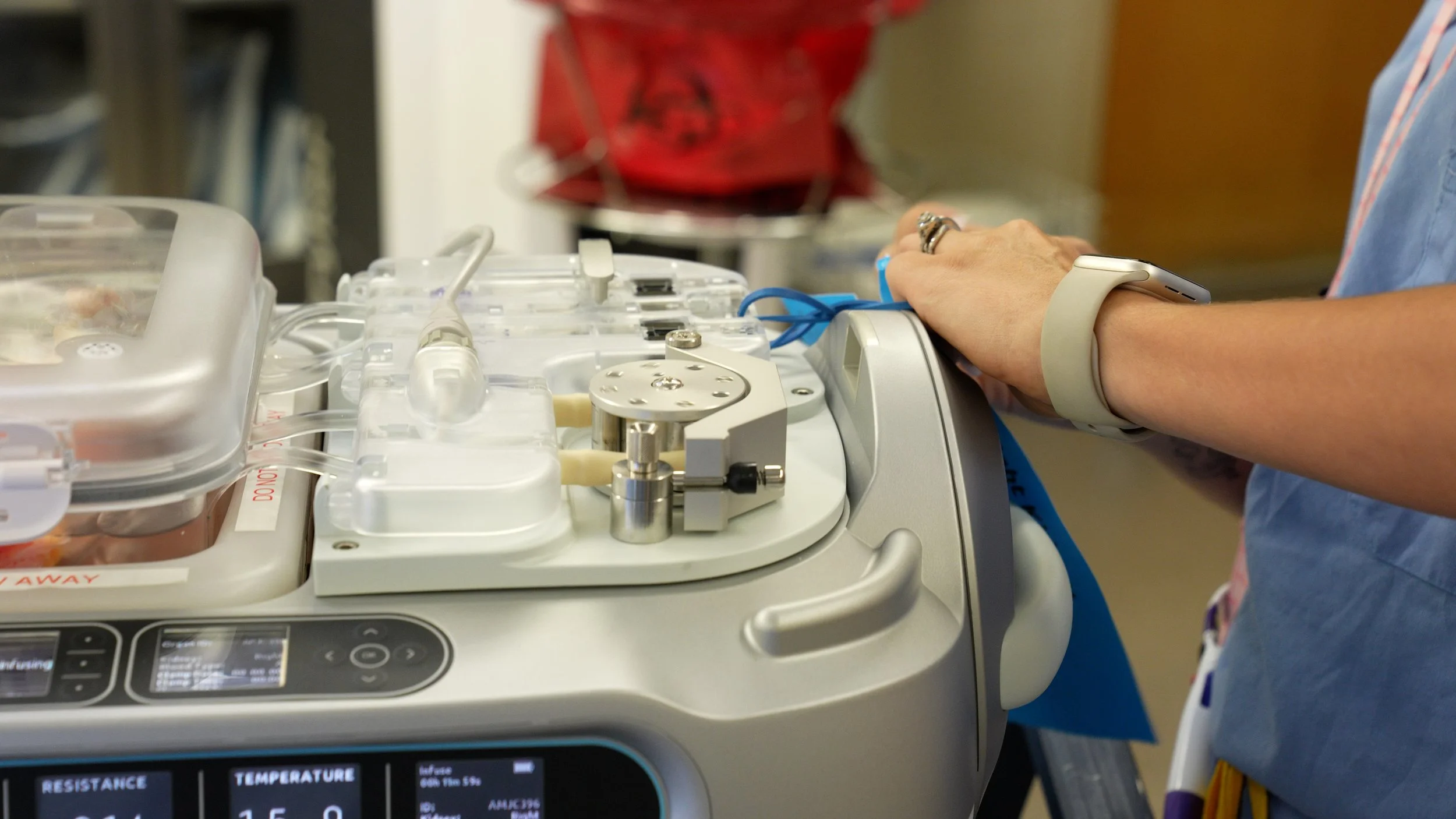
For organ perfusion, that consistency is a clinical requirement. It is not a soft preference. At Gold Standard Preservation, outsourced support means deploying credentialed professionals who align to the transplant center's existing workflows. In practice, that includes:
Normothermic machine perfusion for liver programs
Hypothermic machine perfusion for kidney programs
Protocol-driven monitoring of perfusion parameters throughout each case
Real-time documentation of organ behavior, interventions, and handoff status
The team works as an embedded extension of the partner program. As a result, surgical teams and coordinators interact with a consistent, familiar process. They are not managing rotating unfamiliar personnel. That matters operationally. It also matters for surgeons who depend on reliable pre-implant information to make decisions.
Why Consistency Matters in the Field
Organ perfusion is not a passive process. It requires active interpretation of what the organ is doing. It also requires a disciplined response when parameters shift.
A liver on normothermic perfusion communicates through lactate trends, bile production, and hemodynamic behavior. Similarly, a kidney on hypothermic perfusion communicates through flow rates and resistance patterns. Teams must track trajectories, not just monitor individual readings. A single data point shows where things are. A trend, however, shows where they are going.
When coverage rotates frequently, that interpretive continuity breaks down. Different personnel bring different intervention thresholds. They also bring different documentation habits and different ways of communicating with the surgical team. Over time, those differences accumulate. They create variability in how cases are managed and how information reaches the surgeons making implant decisions.
A dedicated clinical partner standardizes the human element, not just the equipment. The same protocols apply to every case. Documentation stays consistent. Communication stays clear and structured. Consequently, transplant centers get reliable organ perfusion execution regardless of when the case lands or who is on call.
The Financial Case for Outsourcing Organ Perfusion
Operational consistency is one driver for transplant centers to outsource organ perfusion services. Cost structure is another, and for many programs it is equally compelling. Building a fully staffed internal team requires investment across recruitment, credentialing, ongoing training, retention incentives, and overtime pay. That investment stays fixed regardless of case volume. During slow periods, programs carry overhead without a return. During surges, they face emergency staffing costs on top of an already strained budget.

Outsourcing converts that fixed cost into a variable one. Programs pay for coverage when they need it. They avoid carrying excess capacity. They also avoid scrambling to fill gaps with expensive short-term arrangements.
Beyond direct costs, outsourcing removes the administrative burden of managing credentialing cycles, competency validations, and training records. Those responsibilities transfer to the clinical partner. Internal leadership, therefore, recovers time and attention better directed toward program growth and patient care.
For programs evaluating expansion into new organ types, longer hours, or new facility partnerships, outsourced support provides a scalable foundation. Programs can move forward without rebuilding internal infrastructure at every step.
Evaluating the Right Organ Perfusion Services Partner
Not every outsourced arrangement delivers the same value. Before committing to a partnership, programs should ask specific questions about clinical depth, operational reliability, and integration capability.
The Organ Procurement & Transplantation Network (OPTN) sets clear expectations around transplant program performance and quality management. Those standards offer a practical framework for evaluating whether a partner's documentation practices, competency validation, and protocol discipline meet the bar a transplant center already operates under. A partner who cannot speak to those standards specifically is not ready to work inside a high-performing transplant program.
The right partner integrates without friction. They align to existing workflows rather than introducing new ones. They communicate clearly, document thoroughly, and hand off cleanly. These are not exceptional qualities. They are baseline expectations, and programs should confirm them before the first case, not discover them during it.
Outsourcing organ perfusion support works best when the partner understands the operational realities of transplant programs, not just the technology. Gold Standard Preservation was built around exactly that understanding. To learn more about how we support liver and kidney perfusion programs, visit our organ perfusion services page or reach out directly to start a conversation about your program's specific needs.