
A dedicated organ transport vehicle changes what your team can promise a waiting recipient. Every hour saved on the road preserves graft quality and widens the window for a successful transplant. Transport centers and OPOs that treat logistics as clinical infrastructure recover more organs and lose fewer to timing failures.
You already know the strain that unpredictable transport puts on surgeons, coordinators, and recovery teams. Coverage gaps, delayed departures, and unclear handoffs quietly erode ischemia budgets before the organ ever reaches the OR. The right vehicle logistics model gives you predictable timing, cleaner documentation, and one less variable to manage during high-volume weeks.
What Is a Dedicated Organ Transport Vehicle?
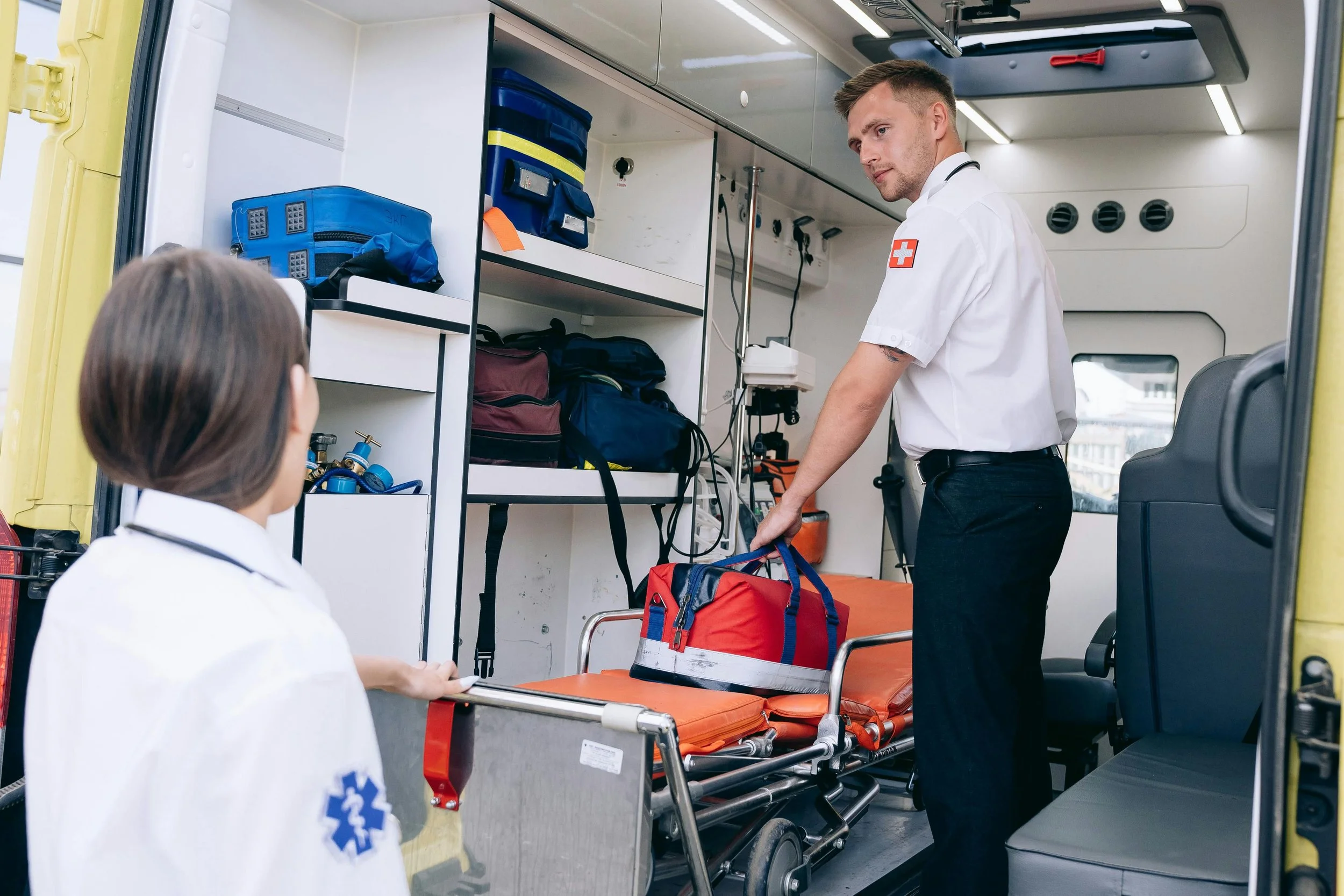
A dedicated organ transport vehicle is a purpose-built ground unit reserved exclusively for moving recovered organs, perfusion devices, and clinical teams between donor hospitals and transplant centers. It runs on standardized protocols, credentialed drivers, and preservation-aware routing to protect cold ischemia time. You get faster departures, tighter chain-of-custody, and consistent readiness across every case your program supports.
How Response Time Affects Organ Viability and Transplant Outcomes
Every recovered organ starts a clock the moment the donor's heart stops beating, which is when the cross-clamp is applied at the donor site. Cold ischemia time drives delayed graft function, primary non-function, and biliary complications in liver and kidney transplants. Faster, more predictable transport gives your surgical team a wider margin before viability becomes the deciding factor.
Predictable vehicle logistics compress ground transport variability into a known window your coordinators can plan against.
A large OPTN/UNOS cohort study published in Kidney Medicine found that delayed graft function climbed from 20.9% at under 16 hours cold ischemia time to 37.5% at 32 to 40 hours. Primary non-function rose along the same curve, from 0.6% to 2.1% across those same time bands. A dedicated organ transport vehicle directly attacks that discard risk by shrinking transit unpredictability.
Meanwhile, discard rates for deceased donor kidneys have climbed since the 2021 allocation change, with 25% of recovered kidneys never reaching a recipient, according to research in Kidney International Reports. Reliable transport logistics protect the organs your program already worked hard to place.
Core Components of an Effective Organ Transport Vehicle Program
An effective organ transport vehicle program treats every run as a clinical event rather than a courier task. You need infrastructure that protects preservation status, supports device-agnostic perfusion equipment, and keeps your recovery team focused on the organ. The following components separate a reliable program from an ad hoc arrangement.
• Purpose-built vehicle interiors sized for perfusion pumps, coolers, and a working clinical team during transit
• Credentialed drivers trained on preservation timing, secure chain-of-custody, and hospital access protocols across your service area
• 24/7 dispatch coverage with real-time GPS visibility for coordinators, surgeons, and receiving OR teams
• Standardized preflight checklists covering fuel, temperature control, oxygen supply, and device readiness before every departure
• Backup vehicle and route redundancy so a single mechanical issue never becomes a lost organ
Together, these components let you scale case volume without scaling operational risk. Programs that lock in these fundamentals recover more predictable ischemia times and cleaner handoff records on every organ recovery case.
Standardizing Documentation and Handoffs Across Every Organ Transport Vehicle Run
Documentation gaps during transport create downstream problems that surface hours later in the recipient OR. Timestamps for perfusion start, cooler seal, vehicle departure, and hospital arrival need to live in one shared record. Consistent capture across every organ transport vehicle run gives your quality team the data to spot patterns and fix them.
Handoffs deserve the same rigor as the transport itself. A verbal report at the receiving center should mirror the written record, with ischemia times, perfusion parameters, and any in-transit alerts confirmed by both parties. Standardized handoff protocols reduce the small omissions that quietly compound into adverse events.
Documentation quality also affects regulatory readiness, payer conversations, and program accreditation reviews. Programs that treat every run as a documented clinical event build a defensible operational record over time, a theme we explore further in our clinical workflow standardization resources.
Pairing Transport Logistics With On-Site Clinical Expertise at the Receiving Center
Fast transport only pays off when the receiving team is ready the moment the vehicle arrives. Gold Standard Preservation deploys board-certified specialists holding ABTC, CSFA, CST, and CPBMT credentials to support recovery, organ perfusion, and handoff at the operating table. Board-certified expertise at the operating table means your surgeons meet a prepared clinical partner, not another gap in the workflow.

GSP averages roughly 50 cases per month per center across organ recovery and machine organ perfusion. Such volume translates into pattern recognition, protocol discipline, and reliable execution when transport windows tighten unexpectedly. Programs supported by GSP gain a consistent clinical presence without adding full-time internal FTEs.
Specialists track organ viability metrics, record ischemia times in real time, and stream data directly to receiving transplant teams during hypothermic and normothermic organ perfusion. Coordinators and surgeons see the same numbers at the same time, which shortens decision cycles at the receiving center. Real-time visibility pairs naturally with the transport timing data your logistics program already captures.
Device-agnostic clinical flexibility lets GSP support your program across current and emerging preservation systems without vendor lock-in. Your team keeps device choice, and the clinical execution stays consistent across every case. The result is a transport-plus-clinical model that treats logistics and bedside readiness as one continuous workflow.
Ready to Tighten Your Transport and Clinical Workflow?
Response times shape outcomes long before an organ reaches the OR, and predictable logistics protect the work your team has already invested. Programs that combine dedicated organ transport vehicle infrastructure with board-certified on-site clinical support recover more organs, run cleaner documentation, and give surgeons a more reliable handoff every time. The combination turns transport from a variable into a controlled clinical input.
Gold Standard Preservation partners with transplant centers and OPOs nationwide to deliver device-agnostic clinical support, standardized workflows, and 24/7 operational readiness across recovery and organ perfusion. Reach out to our team to talk through how coordinated logistics and clinical execution can strengthen your next case.